B: Emergency & Storms
How to Prep Your Desert Yard for Monsoon Season

Monsoon storms hit hard and fast in Arizona. A pre-season checklist to thin trees, fix drainage, and secure your desert yard before the first haboob arrives.
The work that saves a desert yard during monsoon season happens before the first storm, not during it. Arizona's monsoon, roughly June through September, brings 60-plus mph microbursts, haboobs, and flash flooding that can topple trees, wash out rock, and flood a foundation in minutes. A few hours of preparation in late spring, thinning trees so wind passes through, clearing drainage paths, and securing loose materials, is what separates a yard that rides out the season from one that becomes an emergency. Here is the checklist.
What Does a Monsoon Do to a Desert Yard?
Understanding the threat tells you what to prepare for. A monsoon microburst is a sudden, powerful downdraft that slams into the ground and spreads outward as straight-line wind, often more destructive than a tornado of similar strength and gone in minutes. Pair that wind with a downpour that saturates the soil, and the top layer over caliche turns to soft mud that can no longer grip tree roots. The result is the classic monsoon scene: a healthy-looking tree flat across the driveway.
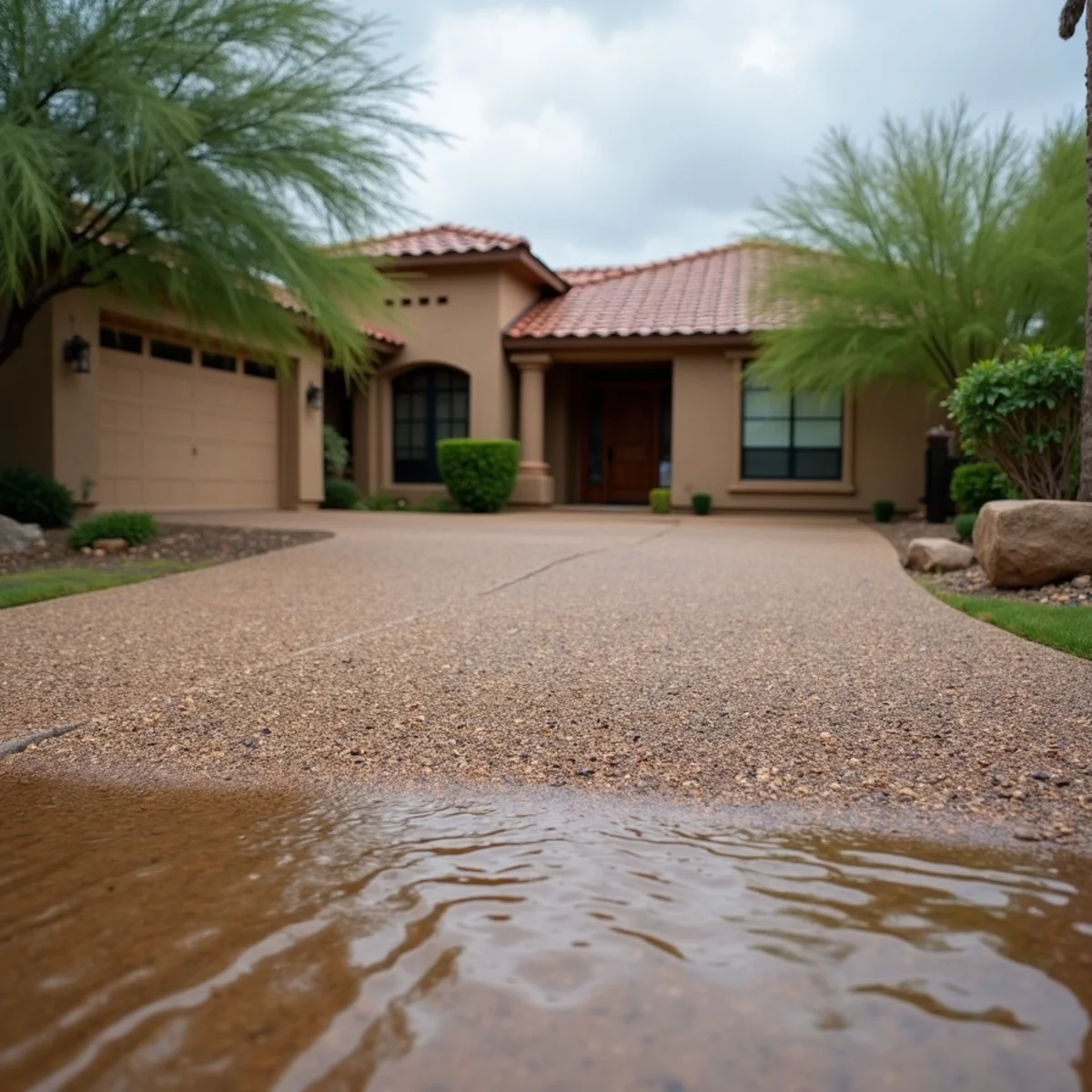
Water is the second threat. Baked desert soil sheds a sudden downpour rather than absorbing it, so water sheets across the surface, carves channels through decomposed granite, and pools wherever grading sends it, sometimes against the house. Preparing a yard means addressing both wind and water before the season starts.
Your Pre-Monsoon Yard Checklist
Run through this checklist in late spring, before the storms arrive. Working the list in order, wind first, then water, then loose objects, covers the failure points that cause the most storm damage.
- 1Have mature and fast-growing trees professionally thinned so wind passes through the canopy instead of catching it like a sail.
- 2Correct weak tree structure early, addressing co-dominant trunks and tight forks before a full canopy load tests them.
- 3Clear drainage paths, swales, and area drains of debris so water can escape instead of pooling.
- 4Check grading around the foundation and low spots to confirm water flows away from the house.
- 5Secure or store loose items: pots, furniture, shade sails, and anything a microburst can turn into a projectile.
- 6Inspect and reset any decomposed granite thin spots and edging that a flash flow could wash out.
- 7Deep-water trees appropriately so roots are hydrated but the soil is not already saturated when storms hit.
How Do You Storm-Proof Your Trees?
Trees cause the most expensive monsoon damage, and they are the most preventable. The single most effective measure is proper crown thinning: selectively removing interior branches so wind flows through the canopy rather than pushing against a solid wall of foliage. Done to ISA and ANSI A300 standards, thinning reduces the sail effect, lightens end weight, and corrects weak branch structure before a storm finds it.
Watering habits matter as much as pruning. Frequent shallow watering trains roots to stay near the surface where a saturated microburst can lever them out. Deep, infrequent watering encourages the anchoring roots that hold a tree down. Fast-growing palo verde and mesquite are the usual casualties precisely because they combine dense canopies with shallow roots from overwatering, so shifting to deep watering well before the season is part of prep.
How Do You Keep Monsoon Water From Flooding Your Yard?
Drainage is the quieter half of monsoon prep, and neglecting it is why yards wash out and foundations take on water. The goal is to give a sudden volume of water a planned path away from the house and living areas. That starts with clearing what already exists: area drains clogged with granite fines and leaves, swales filled in over time, and downspouts pointed at the wrong spot all defeat drainage exactly when it is needed.
Where a yard floods every storm, the fix is usually re-grading, adding a swale or dry riverbed to carry runoff, or installing drains that route water to the street or a suitable outlet. Because desert soil sheds water and caliche blocks it from soaking in, surface drainage design does the heavy lifting. Our monsoon flooding and drainage repair crew diagnoses where water goes during a storm and builds paths that carry it away before it reaches the house.
Decomposed granite is the other detail homeowners underestimate. A flash flow rips through thin or loose granite, scattering it across driveways and leaving bare, eroded channels behind. Before the season, top up thin spots to a consistent two-inch layer over geotextile fabric, firm up the edging that holds it in place, and check that runoff is not being funneled straight across an unprotected granite bed. In flood-prone paths, a band of larger rock or a dry riverbed handles moving water far better than fine granite, which simply washes away.
What Should You Do the Moment a Storm Warning Hits?
Season-long prep handles the structural work; a short pre-storm routine handles the last-minute items. When a haboob or storm warning is issued, a few minutes of action prevents avoidable damage.
- Bring in or tie down potted plants, furniture, umbrellas, and shade sails that wind can launch.
- Move vehicles out from under large trees and away from known flood spots.
- Confirm drains and swales are clear of any debris that blew in recently.
- Keep clear of trees and walls during the storm, and treat any downed lines as live afterward.
If a storm does bring a tree down or floods the yard despite preparation, safety comes before cleanup. Keep people away from leaning trees and standing water near power, photograph damage for insurance from a safe distance, and call a crew equipped for storm work rather than cutting a tree under tension yourself.
It is worth understanding why a downed tree is so dangerous to cut. A trunk that is bent or partially uprooted stores enormous spring energy, and the limbs pinned beneath it can be under compression or tension that is invisible from the outside. Cut the wrong piece and the trunk can snap upright, roll, or drop a heavy section without warning. Professionals relieve that load in a planned sequence, often roping or supporting sections before any cut, which is exactly why storm takedowns are not a job for a homeowner with a chainsaw, however handy.
Get Your Yard Ready Before the Season
The homeowners who sail through monsoon season are the ones who booked tree thinning and drainage work in spring, not the ones scrambling after the first storm. Ecosphere Landscaping handles pre-monsoon preparation and storm response across the East Valley, including Scottsdale and Apache Junction. We are locally owned, licensed, and insured, serving the Mesa area since 2017.
To get your trees thinned and your drainage ready before the storms arrive, call us at (323) 606-0255. If a tree is already down or your yard is flooding, call the same number for emergency dispatch.
Talk to a local desert landscaping expert
Serving Mesa & the East Valley since 2017. Get honest, itemized pricing and water-smart advice for your specific yard.
Frequently asked questions
In late spring, have mature trees professionally thinned so wind passes through, clear and check drainage paths and grading around the house, shift trees to deep infrequent watering, and secure loose pots and furniture. Wind and water are the two threats to address.
Have desert trees professionally crown-thinned in late spring, before the storms begin, typically before June. Thinning to ANSI A300 standards opens the canopy so wind passes through. Never top a tree, which leaves heavy end weight and increases blow-over risk.
Clear existing drains and swales, confirm grading sends water away from the house, and where flooding recurs, add re-grading, a swale or dry riverbed, or drains that route runoff to a suitable outlet. Desert soil sheds water, so surface drainage design does the work.
A downpour saturates the soil over caliche into soft mud while a 60-plus mph microburst pushes on a dense, top-heavy canopy. Trees with shallow roots from frequent shallow watering are most at risk. Crown thinning and deep watering reduce the odds.
Related services & areas
Services
Service areas