B: Emergency & Storms
Drip Irrigation Mainline Burst: Emergency Shutoff & Repair Guide
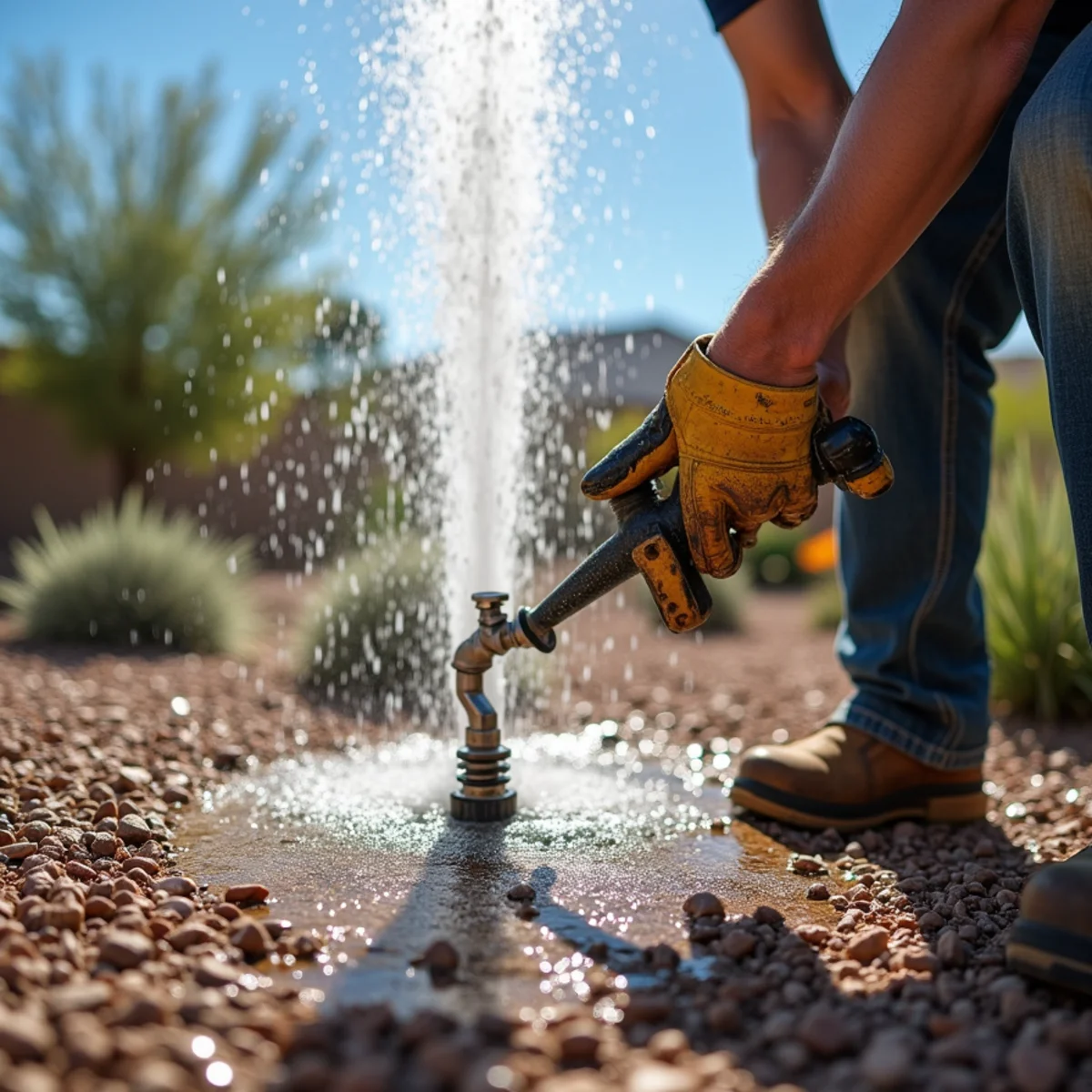
A step-by-step emergency guide to a burst irrigation mainline: how to shut off the water fast, find the leak, avoid meter overage fines, and get a lasting repair.
A burst irrigation mainline wastes water by the hundreds of gallons, and in Mesa's summer heat it can rack up a shocking bill before you even notice. This guide walks you through stopping the water immediately, confirming the problem, and getting a permanent fix. If water is actively surfacing or geysering, act on the shutoff steps first, then call for help.
Spotting an Underground Irrigation Leak: Geysers, Sinking Rock and Huge Bills
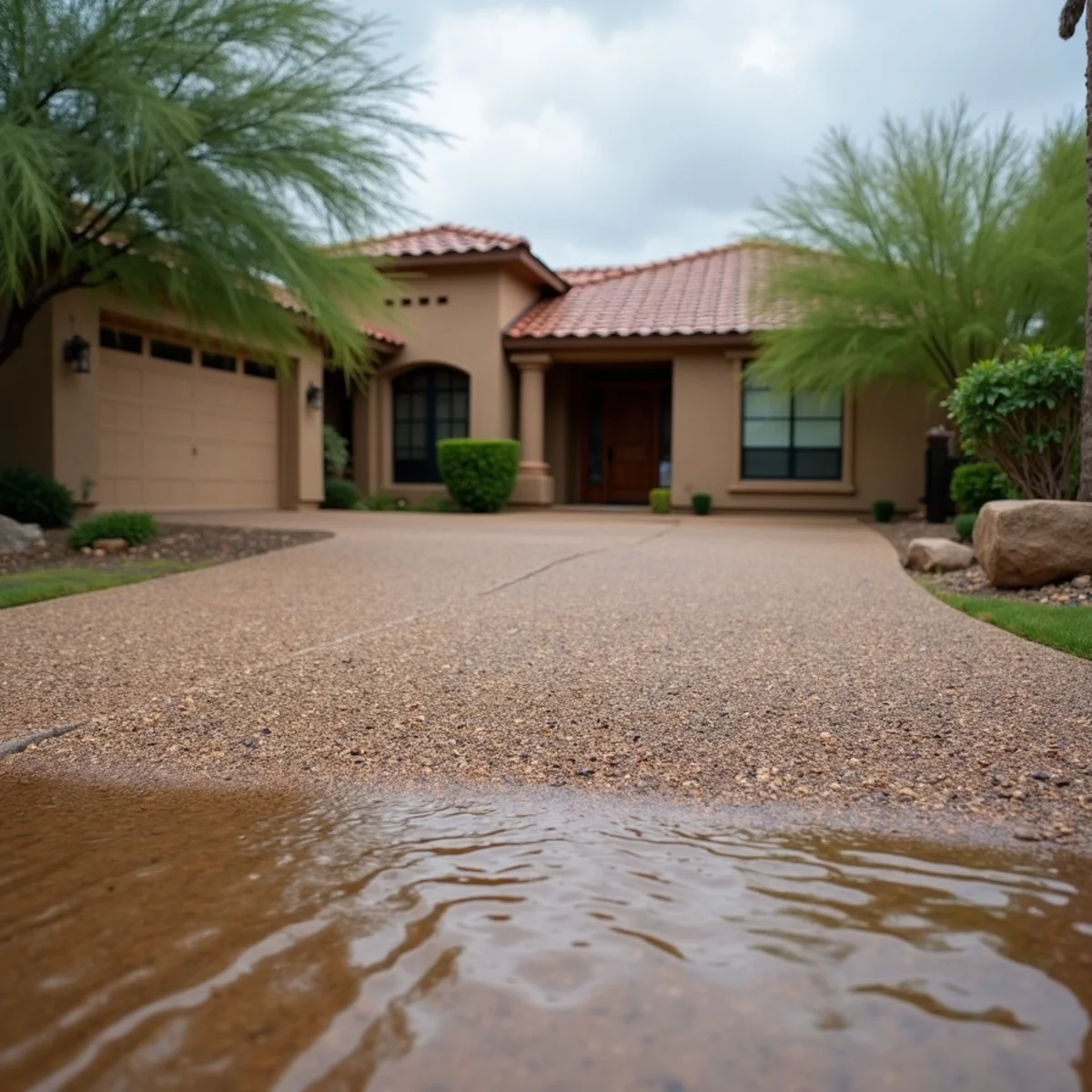
Mainline leaks are pressurized around the clock, unlike a drip zone that only leaks while the valve is open, so the signs are usually dramatic. Learn to recognize them early:
- Water bubbling or geysering up through decomposed granite, often between the meter and the valves.
- A soggy, sunken area or eroded rock where the ground never dries out.
- A sudden jump in the water bill with no change in your habits.
- The water meter's leak indicator spinning while every fixture and zone is off.
- Weak pressure at the emitters because water is escaping upstream of the valves.
How to Locate and Turn Off Your Irrigation Isolation Shutoff Valve
Your first job in an emergency is stopping the flow. Most homes have more than one option, in order of preference:
- 1Find the irrigation isolation valve, often a ball valve near the backflow preventer or where the irrigation line tees off the main. Turn the handle a quarter turn so it sits crosswise to the pipe.
- 2If there is no dedicated irrigation shutoff, use the home's main water shutoff, typically near the front hose bib or in a box near the street.
- 3As a last resort, shut off the water at the meter using the utility's shutoff. Use a meter key and turn gently; do not force a stuck valve.
- 4Once the water is off, open a low hose bib to relieve residual pressure before anyone inspects the line.
Is It the Mainline or a Drip Zone?
Telling the two apart guides how urgently you need to act. A drip zone leak only flows while that zone's valve is open, so it stops when the cycle ends and typically shows up as a soggy spot that comes and goes with the schedule. A mainline leak is upstream of the valves and stays pressurized around the clock, so it leaks continuously whether or not anything is scheduled to run. If water keeps surfacing at 2 a.m. with every zone off, you are almost certainly looking at a pressurized mainline, and shutting the water off cannot wait until morning.
Why PVC Mainlines Crack Under High Summer Heat and Pressure Spikes
Buried PVC in the desert lives a hard life. Ground heat, thermal cycling, and pressure spikes from city supply or fast-closing valves, known as water hammer, all stress the pipe and its glued joints over time. Shallow burial makes it worse, since a line laid too close to the surface takes more temperature swing and physical load. Fittings and solvent-weld joints are the usual failure points, and a joint that was slightly under-cured or over-pressurized can let go years later on the hottest afternoon of the year.
High static water pressure is an underappreciated culprit. Parts of the Valley see supply pressure well above what irrigation components are designed for, and a system running without a properly sized pressure regulator is under constant strain that shortens the life of every fitting on it. Ground movement plays a role too: expansive clay and settling soil flex buried pipe, and a rigid glued joint has little tolerance for that motion. When a repair is done, it is worth checking the whole system's pressure and burial depth so the fix addresses the cause, not just the symptom.
Temporary DIY Patching vs Permanent Schedule 40 PVC Compression Couplings
In a pinch, homeowners sometimes wrap a crack with self-fusing silicone tape or a hose clamp and rubber patch. That may slow a leak long enough to save some water, but it is not a repair; buried PVC under pressure will find the weakness again. A permanent fix means excavating to expose the damaged section, cutting out the failed run, and splicing in new Schedule 40 PVC with either properly solvent-welded fittings or a compression coupling rated for the pressure.
A durable repair also depends on doing the joint right. Solvent-weld connections need clean, dry pipe and full cure time before the water is turned back on; rushing that step in the heat is a common reason a repair fails again within weeks. Compression couplings are useful precisely because they do not require a cure and can join pipe in a damp trench, which is often the reality of an emergency dig. The trench then has to be backfilled and compacted so the new section is supported rather than left to flex against a caliche edge. None of this is exotic, but each step is a place a hurried fix goes wrong.
Preventing Water Meter Overage Fines from City Utilities
A pressurized leak runs 24 hours a day, so the longer it goes, the bigger the bill, and in some cases it can push usage into higher tiered rates or trigger overage concerns from the utility. Shutting the water off promptly is the best defense. If the leak has already inflated your bill, document the repair; many utilities consider a one-time adjustment when you can show a leak was found and fixed. Confirm your specific city's policy directly with them.
To make the case easier, keep a simple record: a photo of the leak, the meter reading when you discovered it, the invoice for the repair, and the date the water was shut off. That paperwork is what turns a request for a courtesy adjustment from a story into a documented event. It also helps to note the leak on your next bill cycle so an unusually high reading is explained rather than assumed to be normal usage going forward.
Preventing the Next Burst
A mainline that failed once is telling you something about the system, and a few measures make a repeat far less likely. Prevention here is cheap compared to another emergency and another inflated bill.
- Install or verify a correctly sized pressure regulator so the line is not running above spec.
- Make sure mainlines are buried at proper depth, out of the worst of the surface heat and physical load.
- Add a master valve that shuts off pressure to the system except when a zone is actually running.
- Use a smart controller with flow monitoring that can alert you to an abnormal flow rate early.
- Have the system pressure-tested periodically so stressed joints are caught before they fail.
Call Ecosphere Landscaping for Same-Day Emergency Pipe Repair
Once the immediate leak is handled, it is worth checking the rest of the system, since a line that failed once often has other stressed joints. Our drip irrigation installation and repair team can pressure-test the whole system and correct shallow burial or worn fittings before the next failure. We respond across Mesa, Gilbert, and Chandler, and we are locally owned, licensed, and insured.
Water still coming up in the yard? Call Ecosphere Landscaping now at (323) 606-0255 for same-day emergency irrigation repair.
Talk to a local desert landscaping expert
Serving Mesa & the East Valley since 2017. Get honest, itemized pricing and water-smart advice for your specific yard.
Frequently asked questions
Find the irrigation isolation valve near the backflow preventer and turn it a quarter turn to close it. If there is none, use the home's main shutoff, or as a last resort the meter shutoff. Then relieve pressure at a low hose bib.
Turn off all fixtures and zones and watch the water meter. If the leak indicator keeps moving, water is escaping on your side of the meter. Surfacing water, sunken rock, and a spiking bill all point to a buried mainline leak.
No. A wrap or clamp may slow the leak temporarily, but buried PVC under pressure will fail again. A permanent repair means cutting out the damaged section and splicing in new Schedule 40 PVC with proper fittings.
Many utilities consider a one-time adjustment when you document that a leak was found and repaired. Policies vary, so confirm the specifics with your city and keep your repair records.
Related services & areas
Service areas