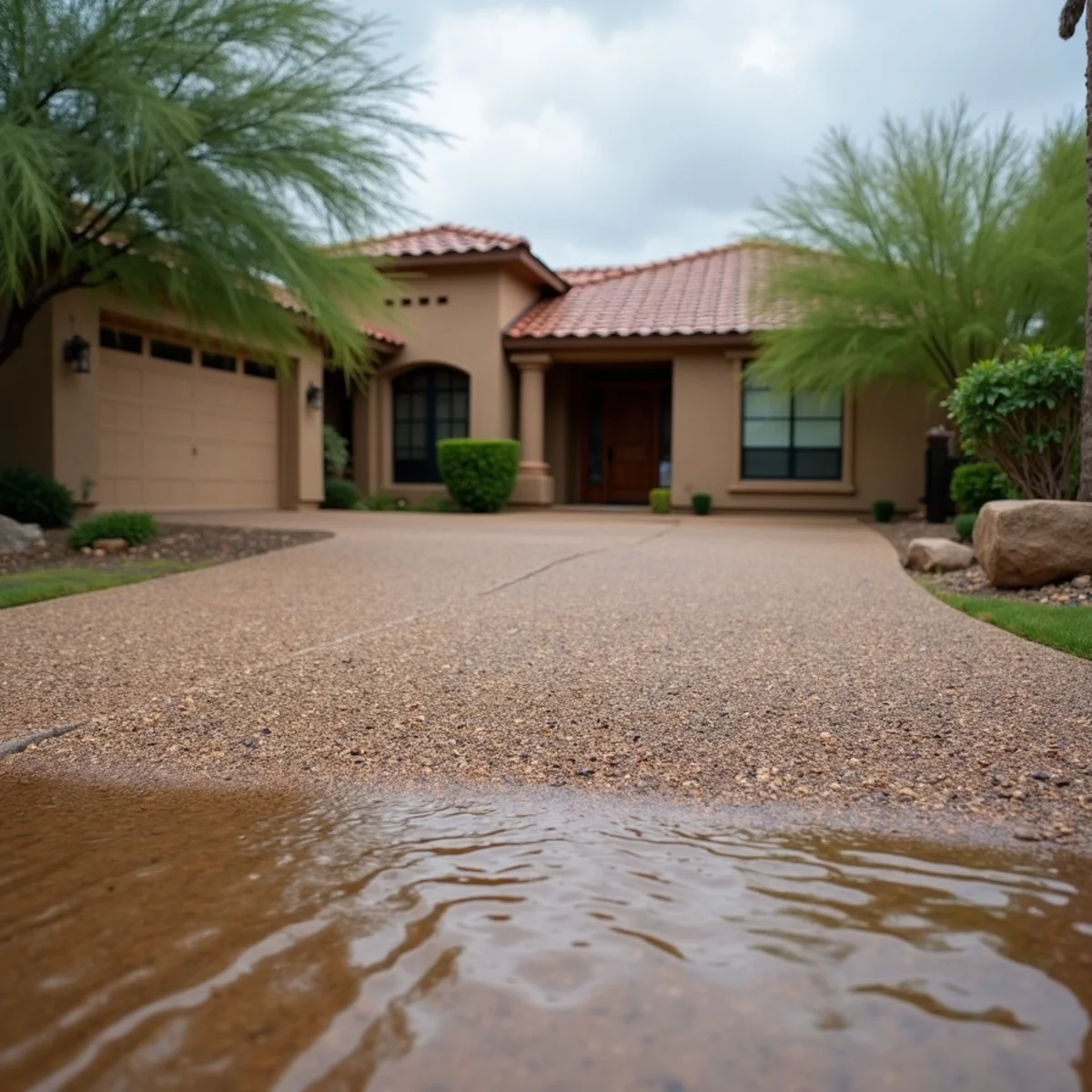
Desert ground is deceptively bad at absorbing rain. Baked, compacted soil and shallow caliche shed water almost like pavement, so when a monsoon dumps an inch in twenty minutes, that water has to go somewhere, and too often it goes toward the house. Homeowners are surprised that the driest place in the state has a flooding problem, but it is precisely the low rainfall that leaves soil unable to take a sudden downpour.
Flash flooding washes decomposed granite into the street, undermines patios and walls, pools against stucco where it invites moisture and pests, and drowns plants in low spots. Standing water against a foundation is more than a nuisance, it is a structural risk.
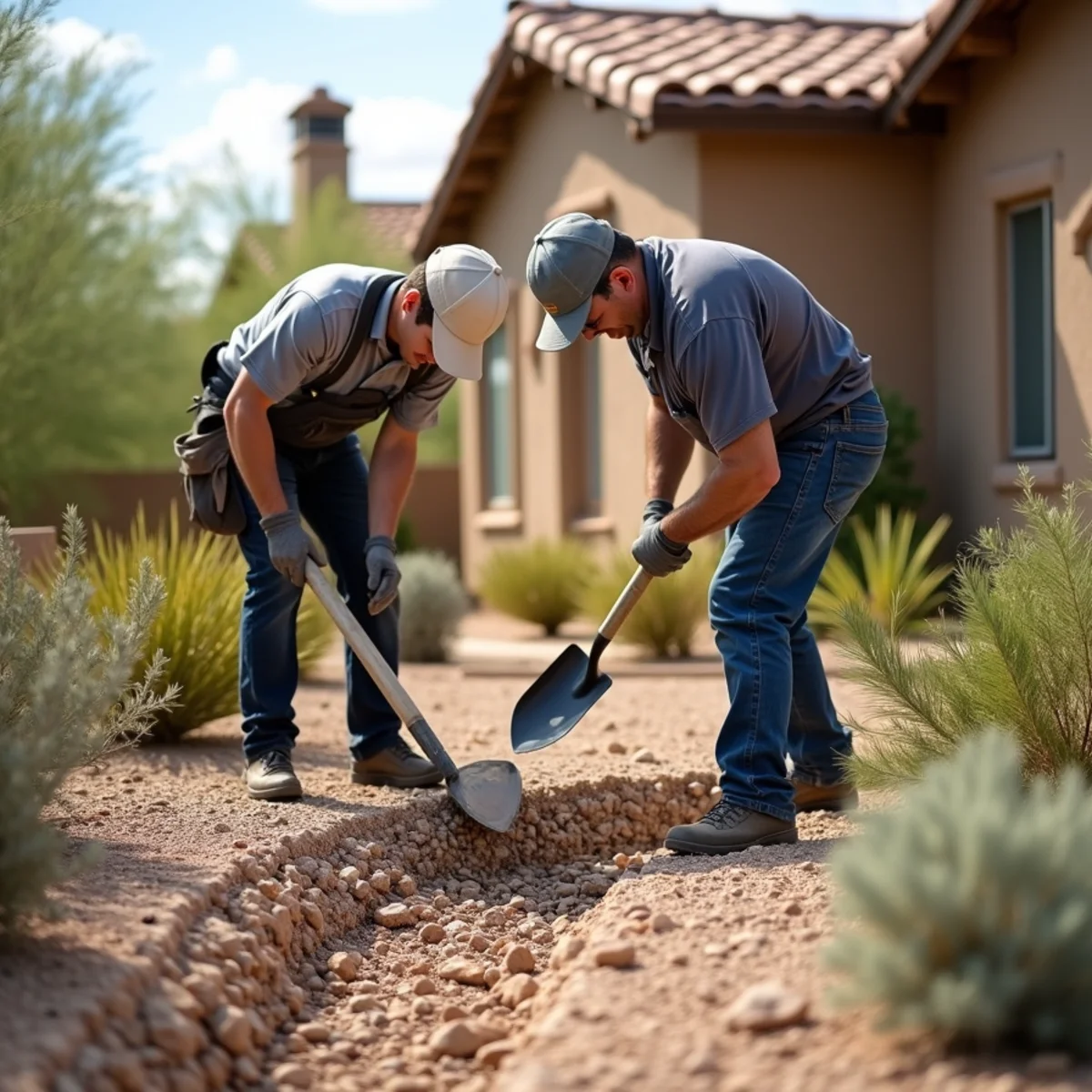
Ecosphere Landscaping designs and installs drainage that moves water where you want it to go. We correct grades, build dry creek beds and swales, and set catch basins and pop-up emitters so your yard survives the storm instead of channeling it into your home.
Drainage problems monsoons expose
- Water pooling against the house, patio or garage after every storm
- Decomposed granite and rock washing into walkways or the street
- A soggy low spot that stays wet for days and kills plants
- Runoff from a neighbor's lot or the street entering your yard
- Eroded channels cutting through beds and undermining edging
- Water sheeting across a patio or pool deck toward the house
- Soil pulling away from foundation walls after repeated flooding
Why desert yards flood
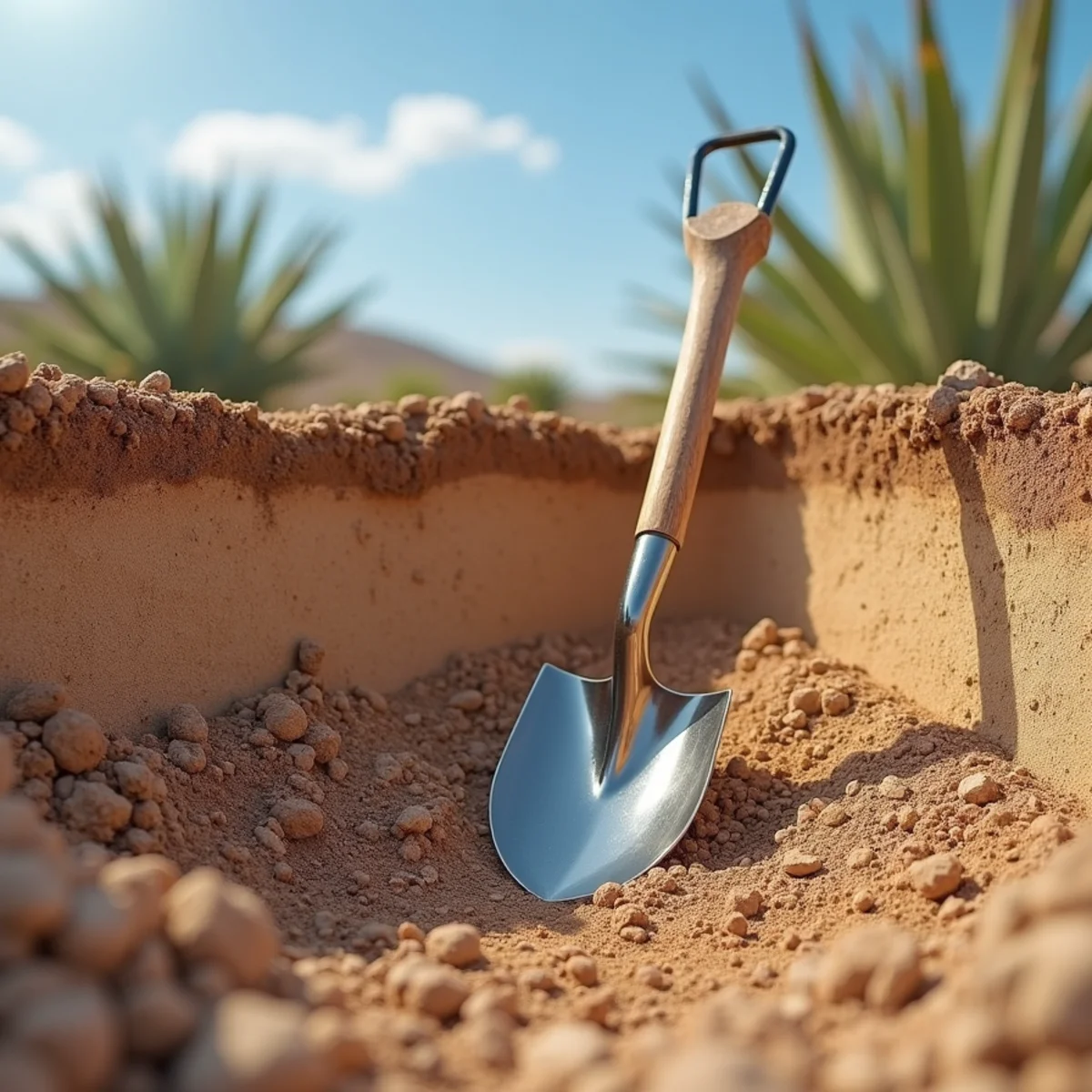
It comes down to infiltration. Long dry spells bake the surface hard, and a shallow caliche layer beneath it blocks water from soaking in, so intense monsoon rain runs off almost immediately. Where the yard slopes toward the house, or where a patio and pool deck add large impervious surfaces, that runoff concentrates fast. Our article on diverting monsoon flash-flood runoff explains why baked desert soil repels rain and how to route the water safely.
The right tool for the flow
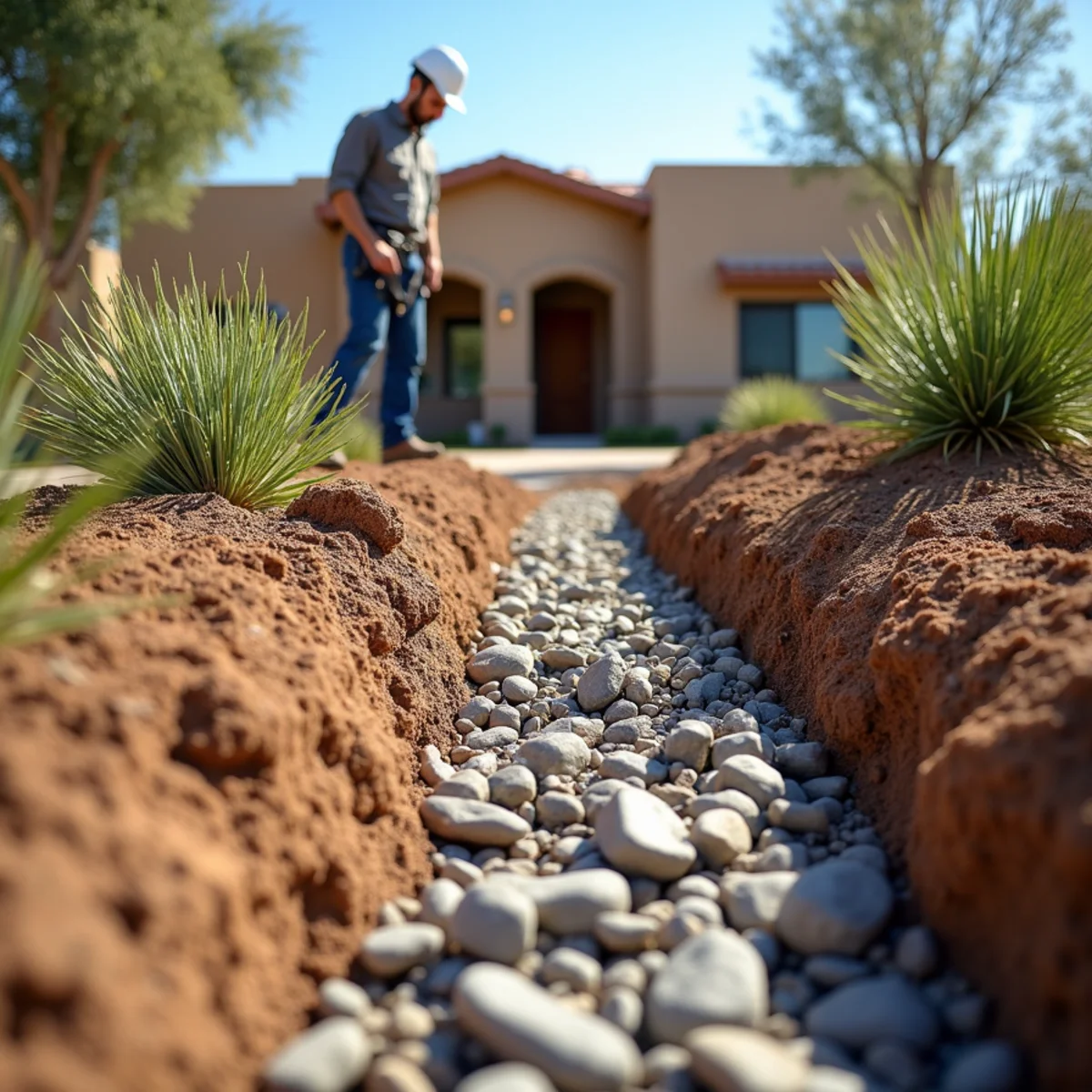
Drainage is not one product; it is a system matched to your yard. A dry creek bed both carries water and looks like an intentional landscape feature. A French drain collects subsurface and surface water where a channel would be intrusive. Catch basins gather water at low points and tie into a pipe that daylights well away from the house. We combine these based on how much water you get and where it needs to end up.
| Solution | Best for | How it works |
|---|---|---|
| Regrading | Water pooling near the house | Reshapes slope to shed water away |
| Dry creek bed | Visible runoff paths | Rock-lined channel carries and shows flow |
| French drain | Soggy areas, subsurface water | Perforated pipe in gravel collects water |
| Catch basin + pipe | Low spots and downspouts | Captures water and pipes it to a safe outfall |
Protecting hardscape and rebuilding after a flood
Flooding and rock go hand in hand: the same storm that washes out your granite also exposes where the water wants to travel. We often rebuild eroded beds with properly sized decomposed granite and rock landscaping and armor the flow path with riprap in the same visit. Where flooding has undermined a slope or wall, we bring in retaining wall and erosion shoring to stabilize the ground for good.
- Grade correction to move water away from structures
- Dry creek beds and vegetated swales
- French drains for soggy and subsurface areas
- Catch basins, pop-up emitters and piped outfalls
- Riprap and rock armoring to stop erosion
How we deliver flooding & drainage
- 1
Map the water
We study where water enters, pools and exits during storms, reading grade, low spots and existing erosion to understand the actual flow path.
- 2
Correct the grade
We re-grade so the ground slopes away from structures, the foundational fix that most other drainage measures depend on.
- 3
Build conveyance
We install dry creek beds, swales or French drains to collect and carry water along a controlled path instead of letting it wander.
- 4
Set collection points
We place catch basins and pop-up emitters at low spots and near foundations to capture water and discharge it safely away.
- 5
Armor against erosion
We line channels with riprap and appropriately sized rock so the flow does not scour the yard or wash the fix away.
- 6
Test and refine
We check the system with water where possible, confirm outfalls are clear and adjust so the design handles a real storm.
What affects the cost
Every desert yard is different, so we quote from an on-site assessment — never a one-size total. These are the main factors that move your estimate:
- Volume of water and severity of the flooding problem
- Amount of regrading required and the slope of the yard
- Type and length of drainage installed, from swales to piped systems
- Excavation through caliche for trenches, drains and basins
- Rock and riprap needed to line and armor channels
- Access for equipment and where water can legally daylight
- Repair of hardscape, beds or walls damaged by prior flooding
Why Mesa homeowners choose Ecosphere for flooding & drainage
We're a locally owned, licensed and insured Arizona ROC contractor that has served the East Valley since 2017. The person who walks your yard is accountable for the crew that finishes it — no call centers, no out-of-town subs.
- 9+ years in the East Valley
- Licensed & insured
- Free estimates
- 24/7 emergency response