C: Problem & Diagnosis
What Is Caliche? How Rock-Hard Calcium Carbonate Ruins Desert Yards
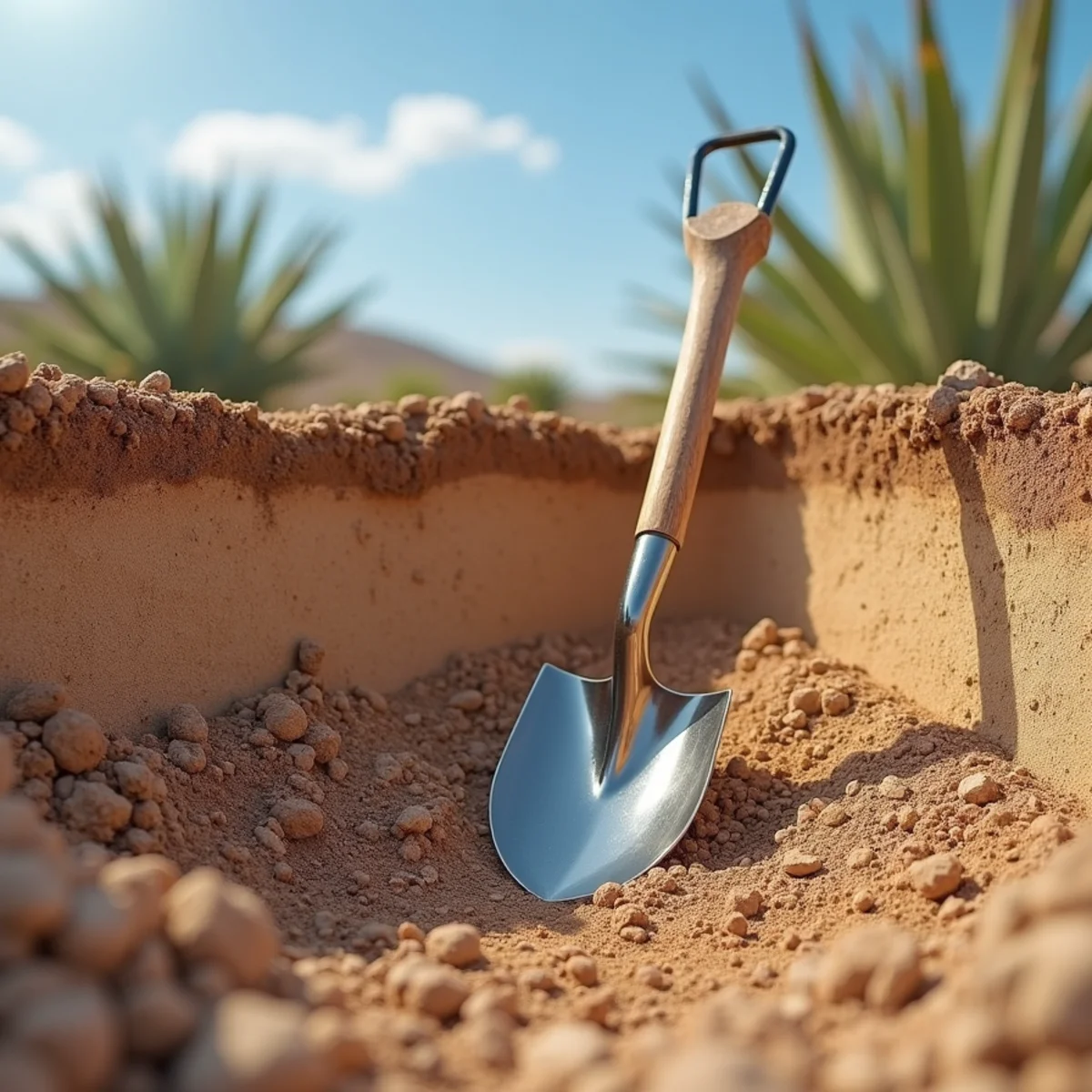
Caliche is the natural concrete lurking under most Arizona yards. What it is, why it defeats shovels and drowns roots with the bathtub effect, and how pros break through.
Ask anyone who has tried to plant a tree in the East Valley and hit a layer that stopped the shovel cold, and they have met caliche. This cement-like hardpan is one of the defining challenges of desert landscaping, and it quietly kills plants that were installed without accounting for it. Understanding what caliche is and how it behaves is essential to building a yard that survives.
The Geology of Caliche: How Ancient Mineral Deposits Form Natural Concrete
Caliche is a hardened layer of calcium carbonate, the same compound found in limestone, that accumulates in arid soils. In a climate with under 10 inches of annual rain, water carries dissolved calcium down through the soil but never deep enough to wash it away. As that shallow moisture evaporates, the calcium carbonate precipitates and cements the soil particles together. Over centuries this builds a layer that ranges from crumbly chalk to a slab as hard as concrete, sometimes inches thick and sometimes several feet. It can sit right at the surface or a foot or two down, and its depth varies across a single yard.
This process explains why caliche is so unpredictable from spot to spot. One planting hole may hit a thin, crumbly seam you can break with a bar, while a hole a few feet away meets a solid shelf that stops a machine. It also explains the color: the whitish, chalky material homeowners uncover and mistake for construction debris or spilled concrete is usually natural caliche. Understanding that it is a continuous geological layer, not a random buried object, changes how you approach every dig on the property.
Why Shovels and Standard Trenchers Bounce Off Arizona Caliche
The hardest caliche genuinely rivals concrete, which is why ordinary tools fail on it. A hand shovel skips off the surface, a garden auger stalls, and even a gas-powered trencher meant for soft soil can bounce or burn out. Homeowners often assume they hit a buried rock or old footing when in fact they have reached a continuous hardpan. Getting through it reliably takes the right equipment, not more determination.
This is where countless weekend projects and rented machines meet their end. A homeowner rents a standard trencher expecting to run a drip line across the yard in an afternoon, hits caliche a foot down, and spends the rest of the day with a machine that will not cut and a half-finished trench. The frustration is not a lack of effort; it is the wrong tool for the material. Concrete-hard ground needs concrete-grade tools, which is exactly what a crew equipped for desert conditions brings to the job.
- Pneumatic breakers and jackhammers to fracture thick, concrete-hard layers.
- Rock augers and heavy-duty bits for planting holes and post holes.
- Mini-excavators for larger areas and mainline trenching.
- Rock saws where a clean, narrow trench is needed through hardpan.
How to Tell If You Have Caliche
You rarely have to guess for long. The classic sign is digging that stops abruptly at a hard, pale layer that a shovel skips off, often within the first foot or two. A few other clues point to caliche even before you dig:
- Whitish, chalky chunks or a cemented crust turned up during any excavation.
- Water that sits in a freshly dug hole for hours or days instead of soaking away.
- Plants that decline in one part of the yard while thriving in another with deeper soil.
- A hollow, ringing sound when a bar strikes the layer, indicating a solid shelf.
- Neighbors with the same struggle, since caliche tends to run across whole areas.
The Bathtub Effect: How Caliche Traps Water and Drowns Tree Roots
Caliche's most insidious damage is not the digging; it is the drainage. When you dig a planting hole down to a caliche layer and set a tree in it, you have effectively created a bucket. Because caliche is nearly impermeable, irrigation and rain fill the hole and cannot drain away, so water sits around the roots. In slow-draining desert soil this bathtub effect suffocates the root system and invites root rot, and the plant declines for reasons the owner rarely connects to a layer they cannot see. Many mysterious plant deaths in the Valley trace back to this exact problem.
The cruel irony is that the symptoms mimic drought. A drowning plant wilts, yellows, and drops leaves, so the owner responds by watering more, which fills the bathtub faster and accelerates the decline. Roots deprived of oxygen in standing water cannot take up moisture properly, so a tree can be simultaneously waterlogged and unable to drink. If a well-watered plant is failing in a spot where water lingers, suspect the caliche bathtub before you reach for the hose, because the real fix is drainage, not more irrigation.
Breaking Through: Pneumatic Jackhammers, Augers and Chemical Dissolvers
There are three broad approaches to caliche, used together depending on the situation. Mechanical breaking with pneumatic tools and augers is the workhorse for planting holes and trenches. For thin caliche, an acidifying soil treatment can slowly soften it, but this is limited and slow and does little against thick, concrete-hard layers. The most reliable method for planting is to fully penetrate the layer so water has a path out, which leads to the technique that saves the most plants.
It is worth being realistic about the chemical route, because it is often oversold. Acidifying products react with calcium carbonate and can help loosen a shallow, soft caliche seam over time, but they are no match for a thick, cemented shelf, and pouring acid into a planting hole will not open a drainage path through hard hardpan. For anything beyond a thin crust, mechanical breaking is the honest solution. Trying to dissolve your way through serious caliche usually wastes a season and a plant.
Drilling Drainage Chimneys Through Caliche Layers to Save Plants
The professional solution to the bathtub effect is a drainage chimney. After digging the planting hole, the crew drills or breaks completely through the caliche floor, creating a vertical shaft down to permeable soil below. Backfilled with gravel or coarse material, this chimney gives trapped water an escape route so the root zone can drain instead of pooling. It is a small extra step that makes the difference between a tree that thrives and one that slowly drowns. Pairing proper caliche penetration with a well-designed desert landscape design and xeriscaping plan is how a yard is built to last.
Before drilling, it helps to confirm the chimney will actually reach drainable soil, since in some spots the caliche is thick enough that a deeper or wider shaft is needed. This is also a moment where a test hole pays off, because it tells the crew how far they must go. Done right, a single well-placed chimney per planting hole quietly solves a problem that would otherwise kill the plant over a year or two, with no visible trace once the yard is finished.
Caliche Is Not Just a Planting Problem
The same hardpan that frustrates gardeners also shapes irrigation and hardscape. Trenching for mainlines and drip runs slows to a crawl where caliche appears, which is why East Valley irrigation quotes carry a trenching contingency. Hardscape base work runs into it during excavation, and it must be broken out to reach stable subgrade for a patio or wall. On the other hand, caliche is not all bad: because it is so firm, it can make a stable base for hardscape once it is worked correctly. The key in every case is planning for it rather than being surprised by it mid-project.
Professional Caliche Excavation by Ecosphere Landscaping
Whether you are planting shade trees, running irrigation, or building a hardscape base, dealing with caliche correctly the first time avoids expensive failures later. Ecosphere Landscaping is locally owned, licensed, and insured, and we handle caliche excavation across Mesa, Gilbert, and Queen Creek. Remember to call 811 before any digging so utilities are marked first.
Hitting rock-hard ground you cannot get through? Call Ecosphere Landscaping at (323) 606-0255 for professional caliche breaking, trenching, and drainage-chimney installation.
Talk to a local desert landscaping expert
Serving Mesa & the East Valley since 2017. Get honest, itemized pricing and water-smart advice for your specific yard.
Frequently asked questions
Caliche is a hardened layer of calcium carbonate that forms in arid soils when shallow moisture evaporates and cements soil particles together. It ranges from crumbly to concrete-hard and is common under Arizona yards, sometimes at the surface and sometimes a foot or more down.
The hardest caliche rivals concrete, so hand shovels skip off it and standard trenchers stall or bounce. Getting through it reliably requires pneumatic breakers, rock augers, or mini-excavators rather than ordinary garden tools.
When a planting hole is dug down to an impermeable caliche layer, water cannot drain away and pools around the roots like a bucket. This drowns the root system and causes rot, killing plants that look like they simply need more water.
By drilling a drainage chimney completely through the caliche layer beneath the planting hole and backfilling it with gravel, giving trapped water a path to permeable soil below so the root zone can drain.
Related services & areas
Service areas