B: Emergency & Storms
Monsoon Tree Damage: Why Palo Verde and Mesquites Topple
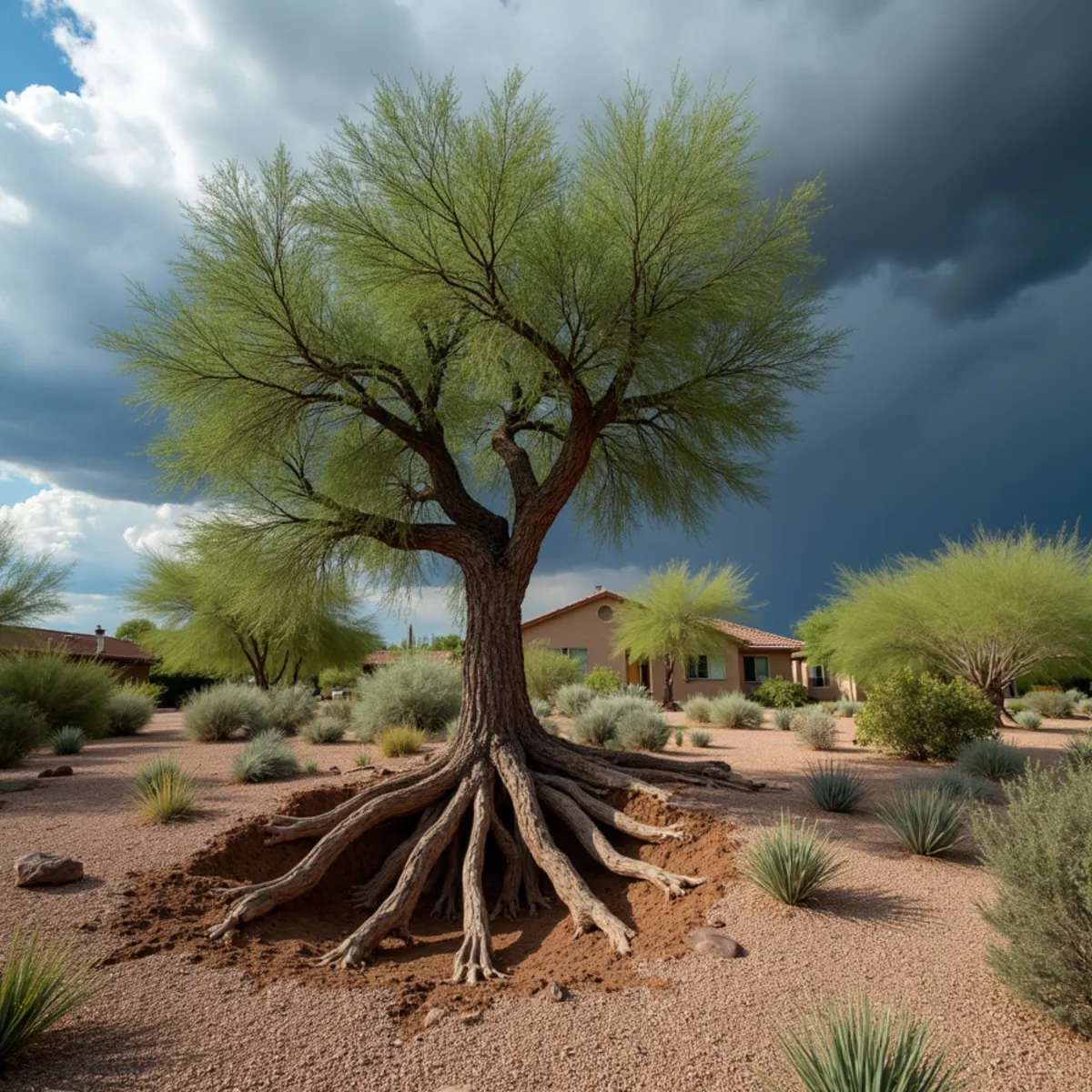
Palo verde and mesquite trees topple in monsoon microbursts for predictable reasons, fast growth, dense canopies, and wet caliche. Here is why, and how to protect yours.
Every monsoon season, East Valley homeowners wake up to the same scene: a beautiful palo verde or mesquite flat on the ground, root plate lifted, canopy across the driveway. It is rarely bad luck. Desert trees topple for specific, preventable reasons, and understanding the physics is the first step to keeping yours standing. If a tree is already down or leaning on your home, skip to the bottom for emergency contact information.
The Physics of a Haboob: 60-Plus MPH Microbursts and Wet Caliche Soil
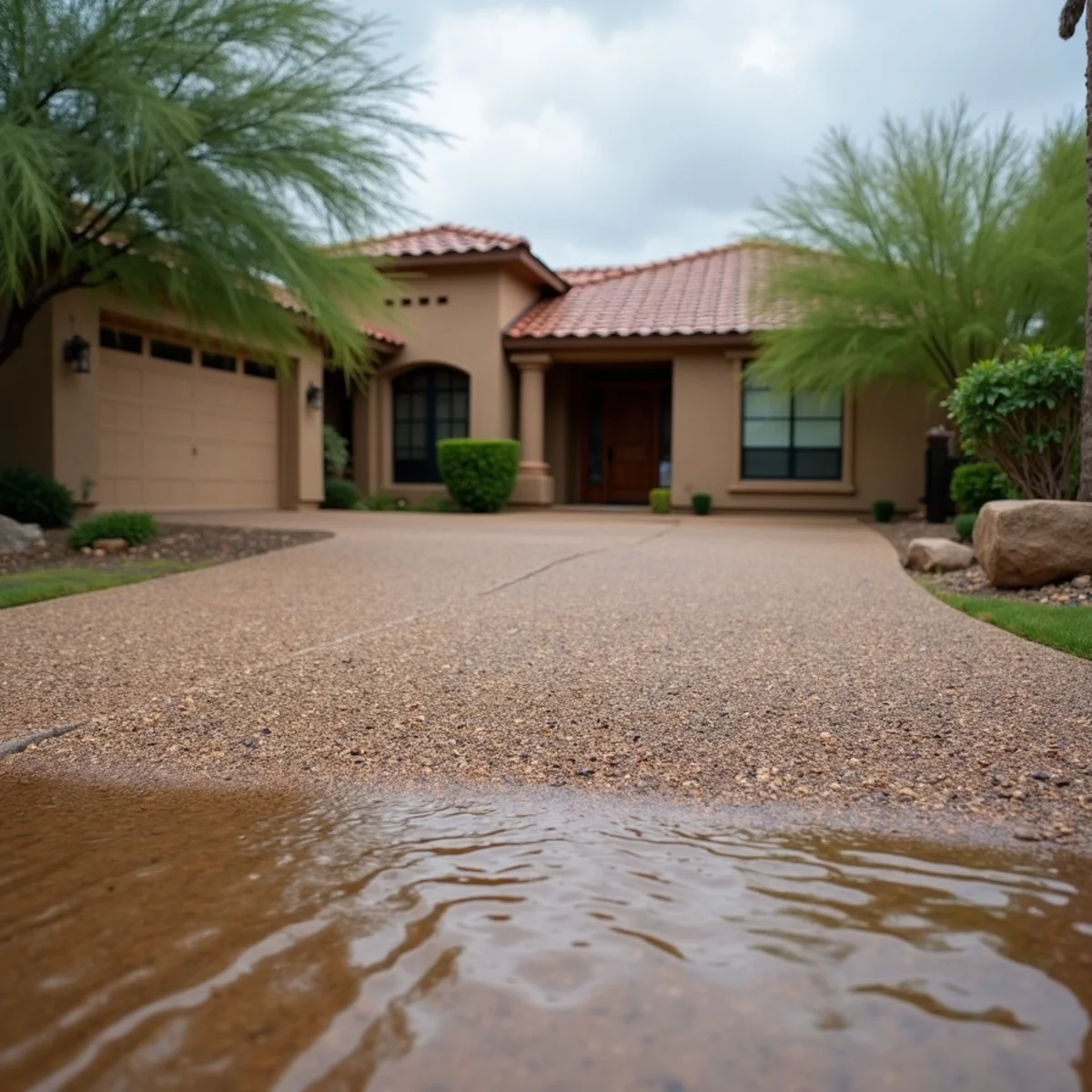
Arizona monsoon storms, roughly June through September, pack straight-line winds that can exceed 60 mph in a microburst, along with haboobs and sudden downpours. The dangerous combination is wind plus water. A downpour saturates the top layer of soil while caliche below traps that water, turning the shallow root zone into soft mud. A tree that stood firm in dry, cemented ground suddenly has nothing to grip, and a strong gust levers the whole root plate out of the ground.
A microburst is worth understanding because it is what does most of the damage. It is a sudden, powerful downdraft of air that slams into the ground and spreads outward in a burst of straight-line wind, often more destructive than a tornado of similar rating because it hits without the warning a rotating storm gives. These events form and dissipate in minutes, which is why a calm evening can turn into a tree emergency and be over before you have processed what happened. The trees that survive are the ones that let that wind pass through an open canopy instead of catching it like a sail.
Why Fast-Growing Desert Trees Become Dangerously Top-Heavy
Palo verde, especially the popular hybrids, and mesquite grow fast, which is exactly why homeowners love them for quick shade. But rapid growth produces dense, sail-like canopies on trunks and root systems that have not had time to match. Overwatering from nearby lawn or drip zones makes it worse, pushing lush top growth on a shallow, lazy root system. The result is a top-heavy tree acting like a giant sail the moment a microburst hits.
Watering habits play a bigger role than most homeowners realize. Frequent, shallow irrigation trains roots to stay near the surface where the water is, so the tree never sends anchoring roots deep. Deep, infrequent watering does the opposite, encouraging a stronger, more spread-out root system that holds the tree down in a storm. A tree planted in a lawn or on a turf sprinkler schedule is almost guaranteed to have shallow roots, which is one reason converting to a proper drip schedule benefits the trees as much as the water bill.
Which Trees Are Most at Risk
Not every tree in the yard carries the same risk, and knowing the high-risk profile helps you prioritize. The trees most likely to fail in a monsoon share a few traits:
- Fast-growing species like hybrid palo verde and mesquite that put on canopy quickly.
- Trees that have never been professionally thinned and carry a dense, solid canopy.
- Trees with co-dominant trunks or tight forks with included bark, which split under load.
- Recently planted trees still on frequent shallow watering with undeveloped root systems.
- Trees planted too deep, or left staked so long they never developed supportive trunk taper.
- Dense, unthinned canopies catch wind instead of letting it pass.
- Co-dominant trunks with tight, bark-included forks split under load.
- Shallow roots from frequent shallow watering give poor anchorage.
- Trees planted too deep or staked too long never develop supportive trunk taper.
Crown Thinning: Opening Air Windows to Let Wind Pass Safely
The single most effective preventive measure is proper crown thinning, selectively removing interior branches so wind flows through the canopy rather than pushing against a solid wall of foliage. Done to ISA and ANSI A300 pruning standards, thinning reduces the sail effect, lightens end weight, and corrects weak branch structure before a storm tests it. Done wrong, it does harm: topping or lion-tailing a desert tree removes interior foliage and leaves heavy end weight, making blow-over more likely.
Emergency Takedown Protocols for Trees Leaning on Roofs or Wires
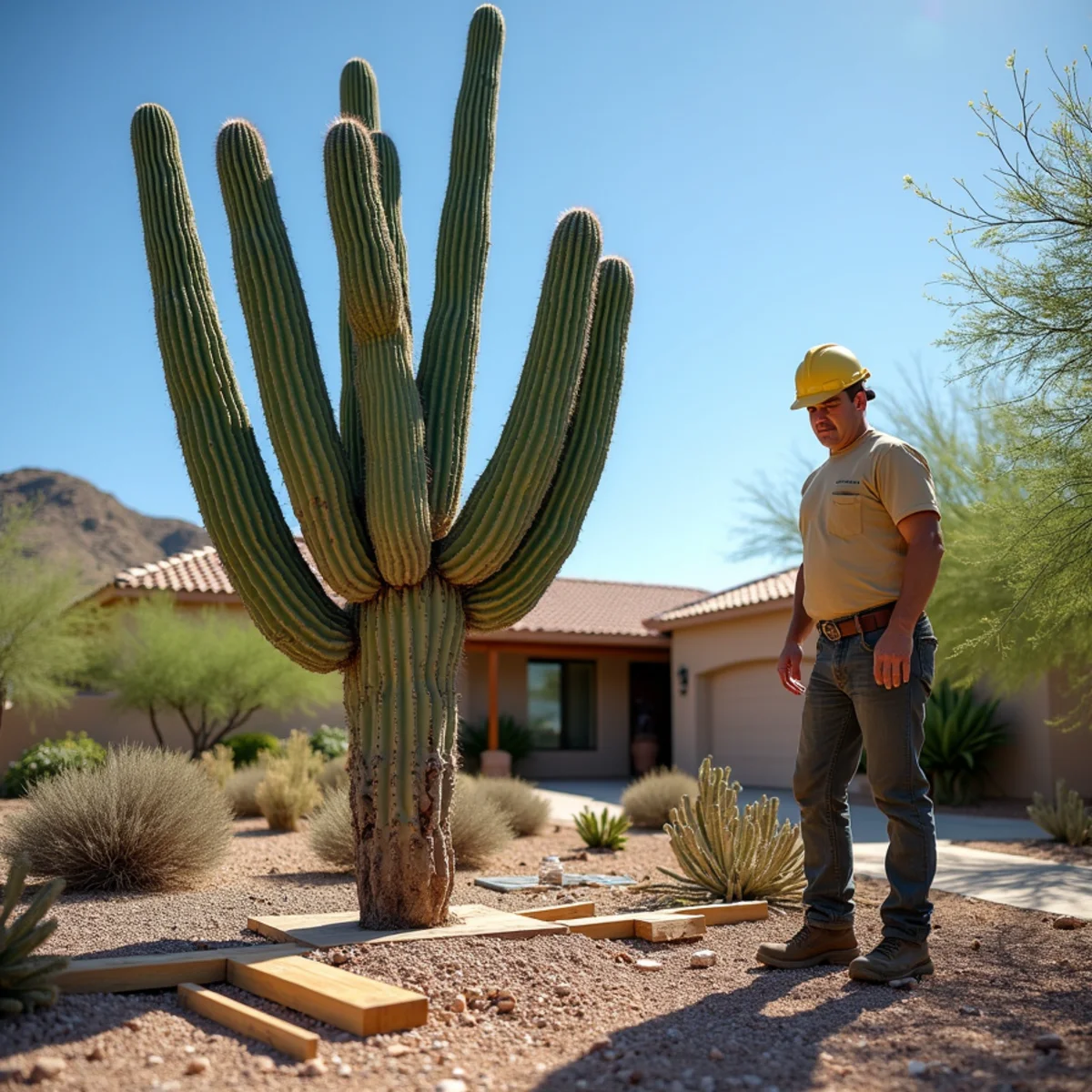
When a tree comes down on a structure, safety sequencing matters more than speed. A leaning tree is under enormous stored tension, and cutting the wrong limb first can whip the trunk or drop a load without warning.
- 1Keep people and pets away from the tree and anything it is resting on.
- 2If the tree is touching or near power lines, treat everything as energized, stay back, and call the utility and 911.
- 3Do not attempt to cut a tree that is under tension or on a roof; that is professional work.
- 4Photograph the damage from a safe distance for insurance before anything is moved.
- 5Call a crew equipped for emergency takedowns to relieve tension safely and remove the tree in a controlled sequence.
Our emergency monsoon storm damage cleanup service handles exactly these scenarios, and for hazardous leaners that must come out entirely, our leaning desert tree removal team removes and stumps them safely.
It is worth understanding why a downed tree is so dangerous to cut. A trunk that is bent or partially uprooted stores enormous spring energy, and the limbs pinned under it can be under compression or tension that is invisible from the outside. Cut the wrong piece and the trunk can snap upright, roll, or drop a heavy section without warning. Professionals relieve that load in a planned sequence, often supporting or roping sections before any cut, which is why storm takedowns are not a job for a homeowner with a chainsaw, however capable.
A Pre-Monsoon Checklist for Your Trees
The best time to deal with monsoon tree damage is before it happens, in late spring before the storms arrive. A short seasonal routine dramatically lowers the odds of waking up to a tree across the driveway.
- 1Have mature and fast-growing trees professionally thinned to ANSI A300 standards so wind passes through the canopy.
- 2Correct structural defects early, addressing co-dominant trunks and weak forks before they carry a full canopy load.
- 3Shift from frequent shallow watering to deep, infrequent cycles that encourage anchoring roots.
- 4Remove long-term stakes from established trees so the trunk can develop supportive taper.
- 5Clear a young or newly planted tree's risk by not overwatering it into top-heavy growth.
Post-Storm Tree Pruning to Save Split Desert Specimen Trees
Not every storm-damaged tree is a total loss. A tree that has partially uprooted or lost a limb can sometimes be saved with prompt corrective pruning, restaking, and a lightened canopy, provided the root plate and main trunk are still sound. The window is short: the longer a partially uprooted tree sits, the more the exposed roots dry out and the lower the odds of recovery. A qualified assessment right after the storm is what separates a savable specimen from one that has to be removed.
When a tree is saved, the work usually involves gently working the root plate back into place, watering it in to settle the soil, reducing and rebalancing the canopy so the roots are not asked to support more than they can hold, and staking it correctly for a defined period rather than indefinitely. Rushing to fill the hole or leaving the canopy heavy are the two most common mistakes that doom an otherwise recoverable tree. Where the trunk is cracked through or the root plate is destroyed, removal is the honest call, and delaying it only leaves a hazard standing until the next storm finishes the job.
24/7 Emergency Storm Tree Dispatch Across the East Valley
Ecosphere Landscaping is locally owned, licensed, and insured, and we dispatch for storm tree emergencies across Mesa, Scottsdale, and Apache Junction. During monsoon season we prioritize trees on structures, vehicles, and access points.
If a tree is down or leaning dangerously, call us now at (323) 606-0255 for emergency dispatch. To keep your trees standing through the next haboob, call the same number to schedule pre-monsoon crown thinning.
Talk to a local desert landscaping expert
Serving Mesa & the East Valley since 2017. Get honest, itemized pricing and water-smart advice for your specific yard.
Frequently asked questions
Almost always a combination of a dense, top-heavy canopy acting as a sail and saturated soil over caliche that lost its grip on the roots. A 60-plus mph microburst then levers the root plate out of the softened ground.
Proper thinning to ANSI A300 standards opens the canopy so wind passes through instead of pushing against it, and it corrects weak structure. It significantly reduces the sail effect that causes blow-over. Topping does the opposite and should be avoided.
Keep everyone clear, treat any nearby power lines as live and call the utility and 911, photograph the damage from a safe distance for insurance, and call a professional crew for a controlled takedown. Do not cut a tree under tension yourself.
Sometimes. If the main trunk and root plate are sound, prompt corrective pruning, canopy lightening, and restaking can save it. The chance drops the longer exposed roots dry out, so get an assessment quickly.
Related services & areas
Service areas