E: DIY vs Pro
How to Kill Bermuda Grass Permanently in Arizona
Bermuda grass survives almost anything, which is why half-measures fail in Arizona. Here is the step-by-step method that actually kills it and keeps it from returning.
To kill Bermuda grass permanently in Arizona you have to destroy its underground network, not just the green blades on top. Bermuda spreads by deep rhizomes below the soil and stolons across the surface, and a single surviving node will resprout through gravel within weeks. The reliable approach is a sequence: exhaust the plant, remove the root mass, block regrowth with a barrier, and stay on top of the stragglers. This guide walks through that method the way a crew does it, and where the DIY line honestly falls.
Why Is Bermuda Grass So Hard to Kill in the Desert?
Bermuda is a warm-season grass that evolved to thrive in exactly the conditions Arizona throws at it: relentless heat, drought, and hard soil. Its rhizomes can push a foot or more down, storing energy that lets the plant regenerate after mowing, drought, or a light herbicide pass. Chop the surface and you have pruned it, not killed it. That is why a homeowner who simply scrapes the lawn and lays rock is usually fighting green shoots poking through the decomposed granite by the next monsoon.
The desert adds one more wrinkle. Under much of the East Valley sits caliche, a cemented calcium-carbonate hardpan that stops shovels cold and traps moisture. Bermuda roots ride along the top of that layer, so removal often means working the whole root plate free rather than digging cleanly beneath it. Understanding the plant's biology is the difference between a one-time job and an annual chore.
What Is the Best Method to Kill Bermuda Grass for Good?
There is no single silver bullet; permanent removal is a stacked process where each step covers the weakness of the last. Follow this order rather than skipping to the part that sounds easiest.
- 1Stop watering the lawn for one to two weeks to stress the grass and make it draw down its root reserves.
- 2Mow low and remove clippings so the plant is forced to spend energy regrowing rather than storing it.
- 3Solarize or treat: clear plastic sheeting sealed at the edges for six to eight summer weeks bakes the crowns, or a systemic herbicide is applied to actively growing grass so it translocates to the rhizomes.
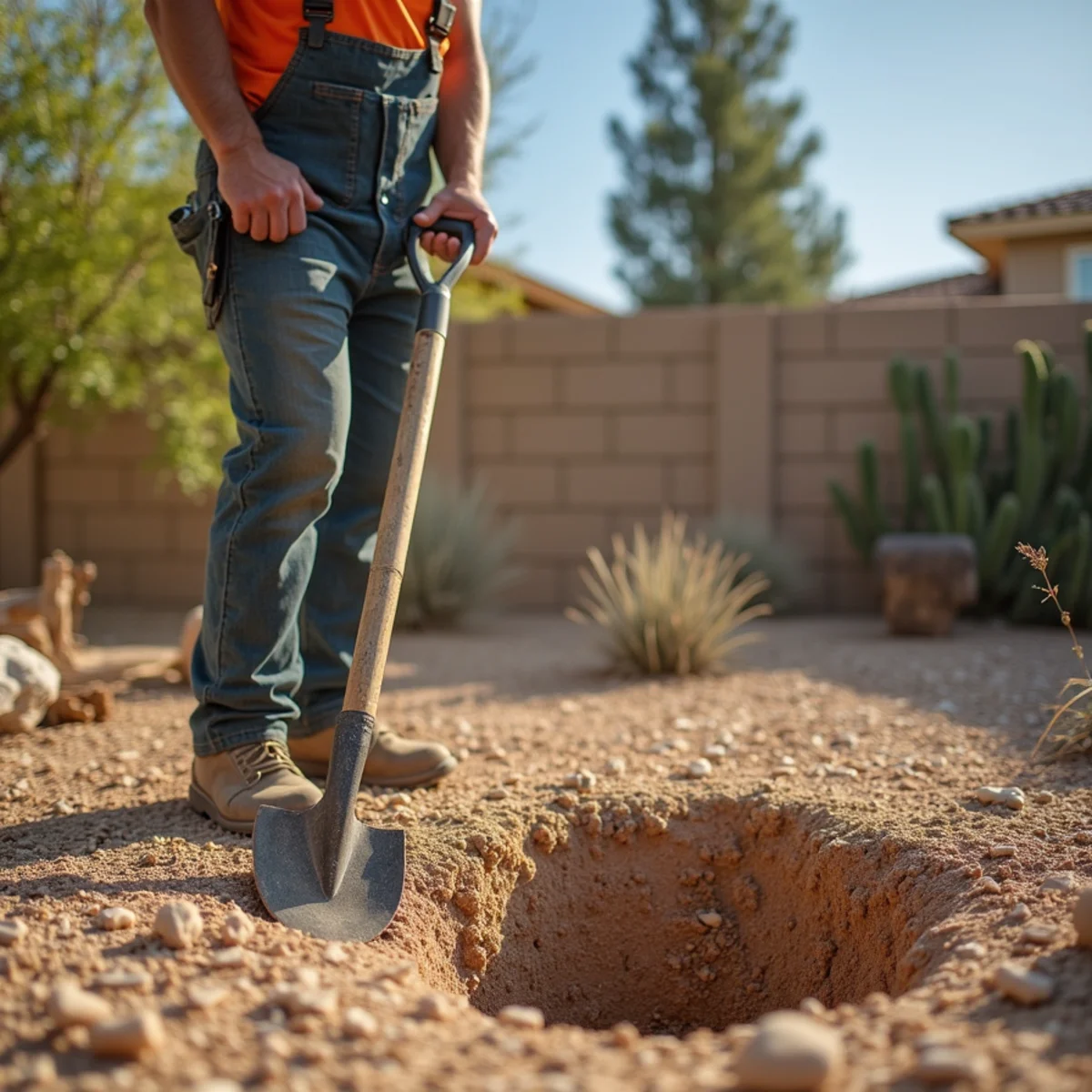
- 4Strip the sod and root mass mechanically with a sod cutter or skid steer, digging out rhizomes rather than tilling, which only chops them into new plants.
- 5Rake and sift the exposed soil to pull every white runner and node you can find.
- 6Install a woven geotextile weed barrier, then cap it with a two-inch layer of decomposed granite.
- 7Spot-treat any survivors promptly for the first full season, because a few nodes always slip through.
Does Solarization Actually Work in Arizona?
Solarization is one of the few desert advantages a homeowner has. By sealing clear plastic tightly over damp soil during the hottest months, roughly June through August, you can drive soil temperatures high enough to cook the rhizomes and the weed-seed bank at the same time. It is chemical-free, which appeals to households with kids, pets, or vegetable beds nearby. The catch is discipline: the plastic must stay sealed and intact for six to eight weeks, and gaps or early removal let the grass recover. Solarization pairs well with mechanical removal afterward, since it weakens the plant so the root mass lifts more easily.
If you would rather not tie up a summer, or the area is large, mechanical stripping combined with a barrier is faster and just as durable. Once the ground is clear, converting to a designed desert yard is the natural next step. Our desert landscape design and xeriscaping team plans the plant palette, grading, and rock layout so the space reads as intentional rather than an empty gravel lot.
Should You Use Herbicide or Remove It Physically?
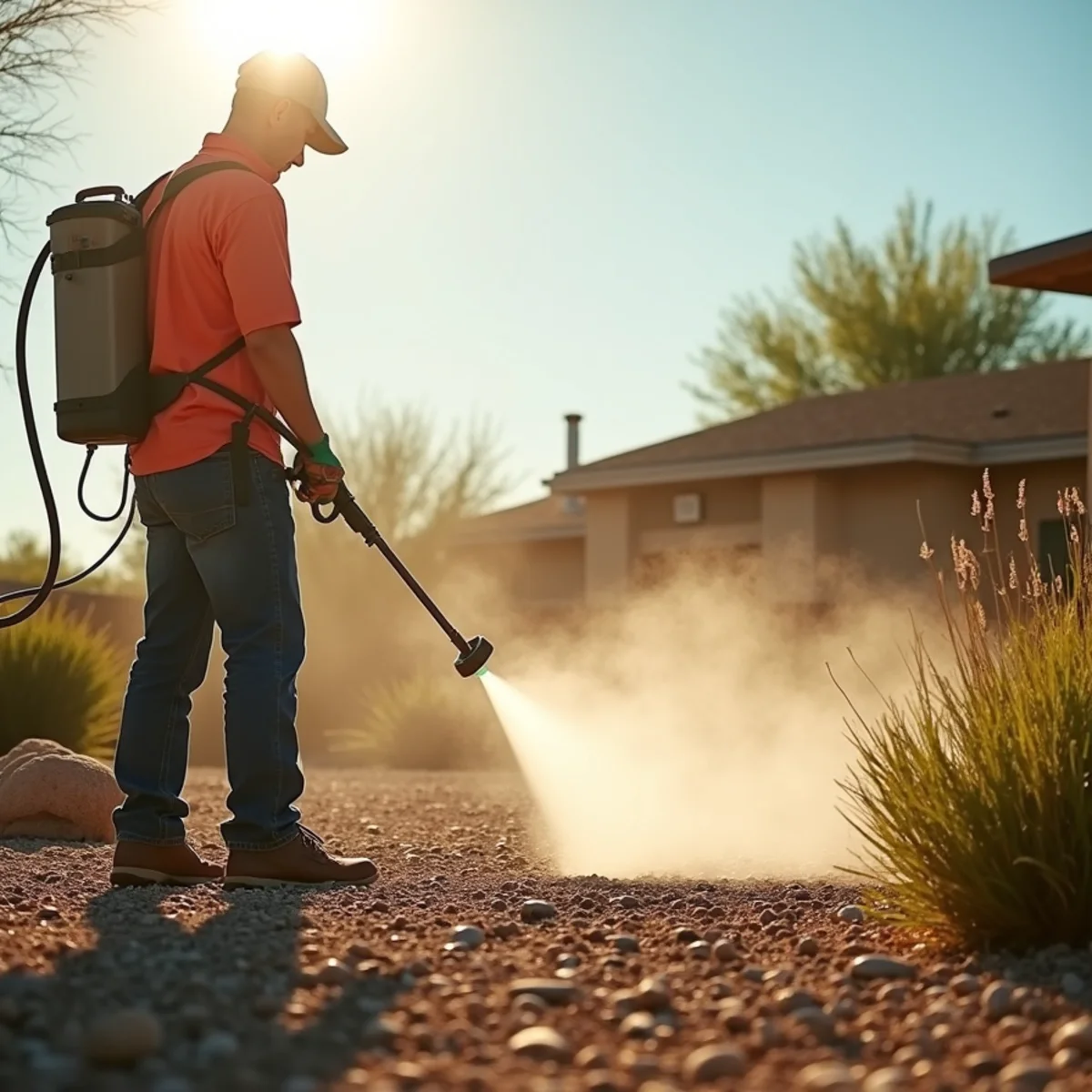
Both have a place, and the right call depends on your comfort level and the site. A systemic herbicide applied to green, actively growing Bermuda moves down into the rhizomes and is effective when timed for the warm growing season, though it usually takes more than one application. Physical removal is immediate and chemical-free but is heavy labor, especially where caliche forces the roots sideways into a dense mat. Many of the most durable results combine the two: knock the plant back chemically or by solarizing, then strip the weakened root mass and cap with a barrier.
| Method | Best for | Trade-off |
|---|---|---|
| Solarization | Chemical-free removal in summer | Needs 6-8 weeks and full sun |
| Systemic herbicide | Large or established lawns | Multiple passes; not organic |
| Sod cutting and stripping | Fast, immediate clearing | Heavy labor; caliche complicates it |
| Barrier plus rock cap | Preventing regrowth long term | Only works after roots are removed |
How Do You Stop Bermuda Grass From Coming Back?
Prevention is where most projects are truly won or lost. After the root mass is gone, a woven geotextile fabric under a full two inches of decomposed granite blocks light and physically stops surface runners from re-establishing. A pre-emergent applied on schedule adds a second line of defense against seed. The final ingredient is simply attention: for the first year, pull or spot-treat any shoot the moment it appears, before it rebuilds an underground network. Bermuda that is denied light, water, and time cannot recover, but a neglected corner will re-seed the whole yard.
Watch your edges, too. Bermuda loves to creep in from a neighbor's lawn or a shared strip along the sidewalk, so a clean steel or concrete edge restraint pays for itself by giving the runners nowhere to sneak through. Grass that migrates under a wall or fence is the single most common reason a cleared yard slowly greens over again.
Set your expectations on timing, too. Bermuda is a marathon, not a weekend. Even a thorough removal leaves a seed bank in the soil and the occasional buried rhizome fragment, so the first spring and summer after the job are when you find out how complete the work was. Treat that season as part of the project rather than a sign of failure: a shoot here and there is normal and easily handled if you catch it early, whereas ignoring those first survivors is exactly how a cleared yard rebuilds a full network and undoes the whole effort.
DIY or Call a Pro?
A small back lawn on soft soil is a reasonable weekend project if you commit to the full sequence and do not shortcut the root removal. The equation changes with scale, hard caliche, or a rebate on the line, where a botched removal costs you both the labor and the reimbursement. Homeowners across Chandler and Gilbert call us when the area is large, the ground is cemented, or they simply do not want to spend a season chasing runners. We strip the sod, break caliche where planting or drainage requires it, install the barrier, and hand off a yard that stays clear.
Ecosphere Landscaping is locally owned, licensed, and insured, serving the East Valley since 2017. If you are ready to be done with Bermuda for good rather than fighting it every summer, call us at (323) 606-0255 for a site walkthrough and a written estimate you can take straight to a rebate application.
Talk to a local desert landscaping expert
Serving Mesa & the East Valley since 2017. Get honest, itemized pricing and water-smart advice for your specific yard.
Frequently asked questions
No. Household or horticultural vinegar burns the green blades but does not reach the deep rhizomes, so the grass resprouts. It can help suppress small survivors after the root mass is removed, but it is not a standalone kill method.
Solarization needs six to eight summer weeks, and systemic herbicide usually takes multiple passes over a growing season. Mechanical stripping is immediate, but plan on spot-treating stragglers for the first full year to catch nodes that slipped through.
Not successfully. Rock alone lets runners push straight through, and without a barrier the grass returns within a season. Remove the root mass first, then install a woven geotextile fabric under a two-inch decomposed granite cap.
Because living rhizomes or stolons were left in the soil, or the yard has no weed barrier. A single surviving node regenerates the whole network. Full root removal plus a fabric barrier and prompt spot-treatment is what stops it.
Related services & areas
Service areas