E: DIY vs Pro
The Brutal Reality of DIY Trenching in Arizona Caliche
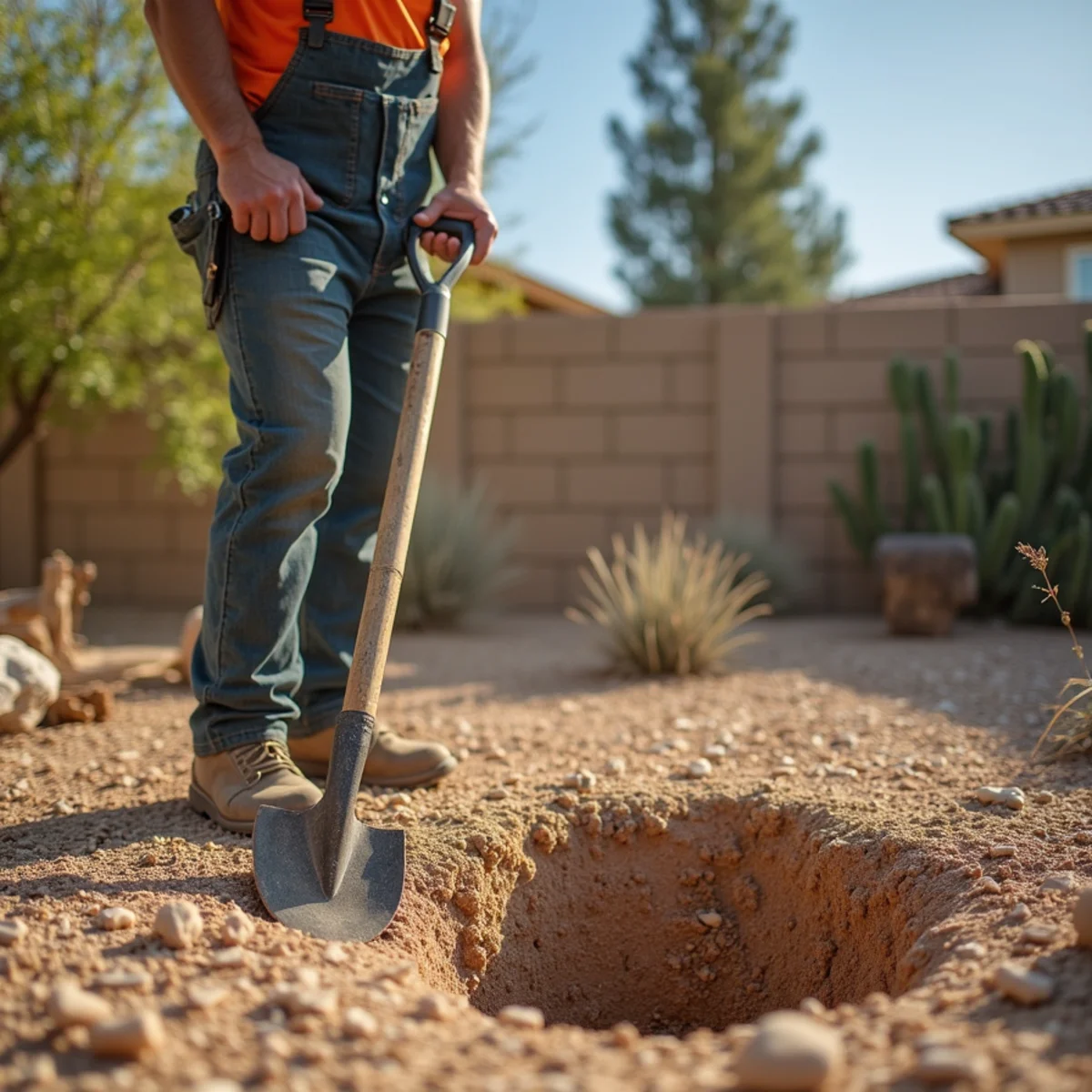
That rented trencher will not touch Arizona caliche. Before you spend a weekend and hurt yourself, here is the brutal reality of DIY digging in desert hardpan.
It looks simple on a Saturday morning: rent a trencher, run a line for irrigation or lighting, backfill by dinner. Then the machine hits caliche and the day falls apart. Caliche is a cemented layer of calcium carbonate hardpan that ranges from a few inches thick to several feet, and it can be nearly as hard as concrete. This is the honest, unglamorous account of what DIY trenching in Arizona caliche actually involves — so you can decide before you are exhausted, injured, or standing over a struck gas line.
Why Rented Home Depot Trenchers Burn Belts in Minutes
The walk-behind trenchers you rent are built for soil, not stone. When the chain meets a caliche layer, it stops cutting and starts slipping, and the drive belt — the cheapest part designed to fail first — glazes, smokes, and burns through in minutes. You will smell it before you understand it. Many homeowners end up returning a machine that barely scratched the surface, having paid a full-day rental to dig a few feet of shallow trench. Caliche simply does not yield to consumer equipment.
It helps to understand what caliche actually is. Over thousands of years, calcium carbonate leaches through the soil and cements the particles into a hardpan layer that can range from a thin crust to a slab several feet thick. In much of the East Valley it sits just a foot or two down, right where you need to run irrigation and lighting. Because it is chemically cemented rather than merely compacted, wetting it barely helps and it does not break along predictable seams the way ordinary rock does — it resists in every direction at once.
Physical Injuries: Jackhammer Vibration, Heat Exhaustion & Back Strain
When the trencher fails, people reach for a pick, a digging bar, or a rented electric jackhammer, and this is where it gets dangerous. Breaking caliche by hand is brutal physical work in an environment that is already trying to hurt you.
- Heat exhaustion: Swinging a pick in 105-degree heat pushes core temperature up fast; every summer, ER visits spike from yard work that started as a small project.
- Back and shoulder strain: The repeated impact of striking hardpan wrenches backs, shoulders, and wrists — injuries that linger long after the trench is done.
- Vibration injury: Extended jackhammer use transmits vibration that numbs hands and, over time, causes real nerve and circulatory damage.
- Impact injuries: Chips of shattered caliche fly; a bar that skips off hardpan can crack a shin or a foot.
None of this is theoretical. Emergency rooms across the Valley see a predictable summer wave of heat illness and orthopedic injuries from weekend yard projects that turned into hours of pounding hardpan in triple-digit heat. The people most at risk are exactly the ones most likely to push through — determined to finish a job they have already sunk a rental fee and a Saturday into. If you do attempt any hard digging in summer, work in the early morning, hydrate constantly, and stop at the first sign of dizziness or nausea; the trench is never worth a heat stroke.
Hitting Buried Gas Lines or Electric Feeds: Call 811 Essentials
This is the risk that turns a bad weekend into a catastrophe. Buried gas, electric, water, and communication lines cross residential yards, and striking one is potentially fatal. Arizona law requires you to call 811 at least two full working days before any digging so utilities can be located and marked for free. Do it every time, even for a shallow trench — locations shift, and homeowner-installed lines are often shallower than code. Calling 811 is not optional and it is not a formality.
There is a particular trap with caliche. When you finally break through a stubborn layer with a jackhammer or a bar, you cannot see what is directly beneath it, and the tool carries far more momentum than a careful shovel. That combination — an aggressive tool and zero visibility into the next few inches — is exactly how homeowners nick a gas line or an electrical feed. The 811 locate tells you where the marked utilities run, but it does not mark private lines like a sprinkler main or a pool bonding wire, so slow down and hand-expose anything near a marked corridor.
Failing to Dig Deep Enough: Surface Roots and Buried Pipe Frost Cracks
Even when people muscle through, DIY trenches are usually too shallow. Irrigation mainlines run under pressure and need to sit deep enough to survive foot traffic, root heave, and the rare hard freeze that can crack a shallow line. Lines laid just under the surface get sliced by the next shovel, lifted by tree roots, or cracked when the ground shifts. Digging shallow because caliche is hard is exactly how a job comes back to haunt you a year later as a mainline leak.
Grade is the other detail shallow DIY trenches get wrong. Drainage lines and even irrigation runs often need a consistent slope, and a trench that dips and rises because the digger simply followed the path of least resistance through the caliche will trap water, air-lock, or drain the wrong way. A machine-cut trench holds a straight line and a steady depth, which is what lets the system perform as designed. Fighting hardpan by hand almost guarantees an uneven trench, and the problems that follow are baked in from day one.
Why Commercial Mini-Excavators with Rock Teeth Are Essential
There is a reason professionals do not fight caliche with hand tools. The right equipment for hardpan is a pneumatic breaker or a mini-excavator fitted with rock teeth, machines with the weight and power to cut through cemented calcium carbonate cleanly and to proper depth. What takes a homeowner a wrecked weekend takes the right machine a fraction of the time, with a straight, correctly graded trench and no burned belts or blown backs. This is precisely the equipment our caliche soil breaking and trenching crews run every day.
Caliche also creates a problem the machine does not solve by itself: drainage. Because the hardpan does not let water pass, a planting hole dug into caliche becomes a bathtub that holds water around the roots and drowns the plant, and a trench can trap runoff against a foundation. Professional excavation means breaking through the layer far enough to restore drainage and, where needed, creating a chimney or drainage path so water can escape. Simply chipping a shallow slot and backfilling it often trades a digging problem for a root-rot problem a year later.
Save Your Back: Hire Professional Caliche Excavation at Ecosphere
If your project involves running irrigation, lighting, or drainage through desert hardpan, the smart move is to let the right equipment and a trained crew do it. We break caliche to proper depth, coordinate 811 locates, and set up clean trenches ready for a durable drip irrigation installation. We serve Mesa, Gilbert, and Apache Junction, where caliche is a fact of life.
There is also the matter of hauling and disposal. A caliche excavation generates a surprising volume of dense, heavy rubble that will not simply be raked back into the trench, and figuring out how to move and dispose of it is a job in itself for a homeowner without a truck and a plan. A professional crew arrives ready to break, remove, and haul the spoil, backfill correctly, and leave a finished, gradable surface. That end-to-end handling is part of why the professional route usually costs less in total time, money, and aggravation than a DIY attempt that stalls halfway.
Ecosphere Landscaping is a locally owned, licensed, and insured family business founded in 2017. Before you burn a belt or hurt your back, call us at (323) 606-0255 for a straightforward estimate on professional caliche excavation.
Talk to a local desert landscaping expert
Serving Mesa & the East Valley since 2017. Get honest, itemized pricing and water-smart advice for your specific yard.
Frequently asked questions
Usually not. Consumer walk-behind trenchers are built for soil, and caliche is a cemented hardpan nearly as hard as concrete. The drive belt typically glazes and burns through in minutes with little progress made.
Yes. Arizona law requires calling 811 at least two working days before any digging so utilities are located and marked for free. Striking a gas or electric line can be fatal, so professionals call every time.
Pneumatic breakers and mini-excavators fitted with rock teeth. They have the weight and power to cut cemented calcium carbonate to proper depth cleanly, which hand tools and rented trenchers cannot do.
Shallow lines get sliced by later digging, lifted by tree roots, and cracked by ground movement or a rare hard freeze. Pressurized irrigation mainlines in particular need proper depth to last.
Related services & areas
Service areas