D: Material Comparisons
Palo Verde vs Velvet Mesquite: Choosing the Best Desert Shade Tree
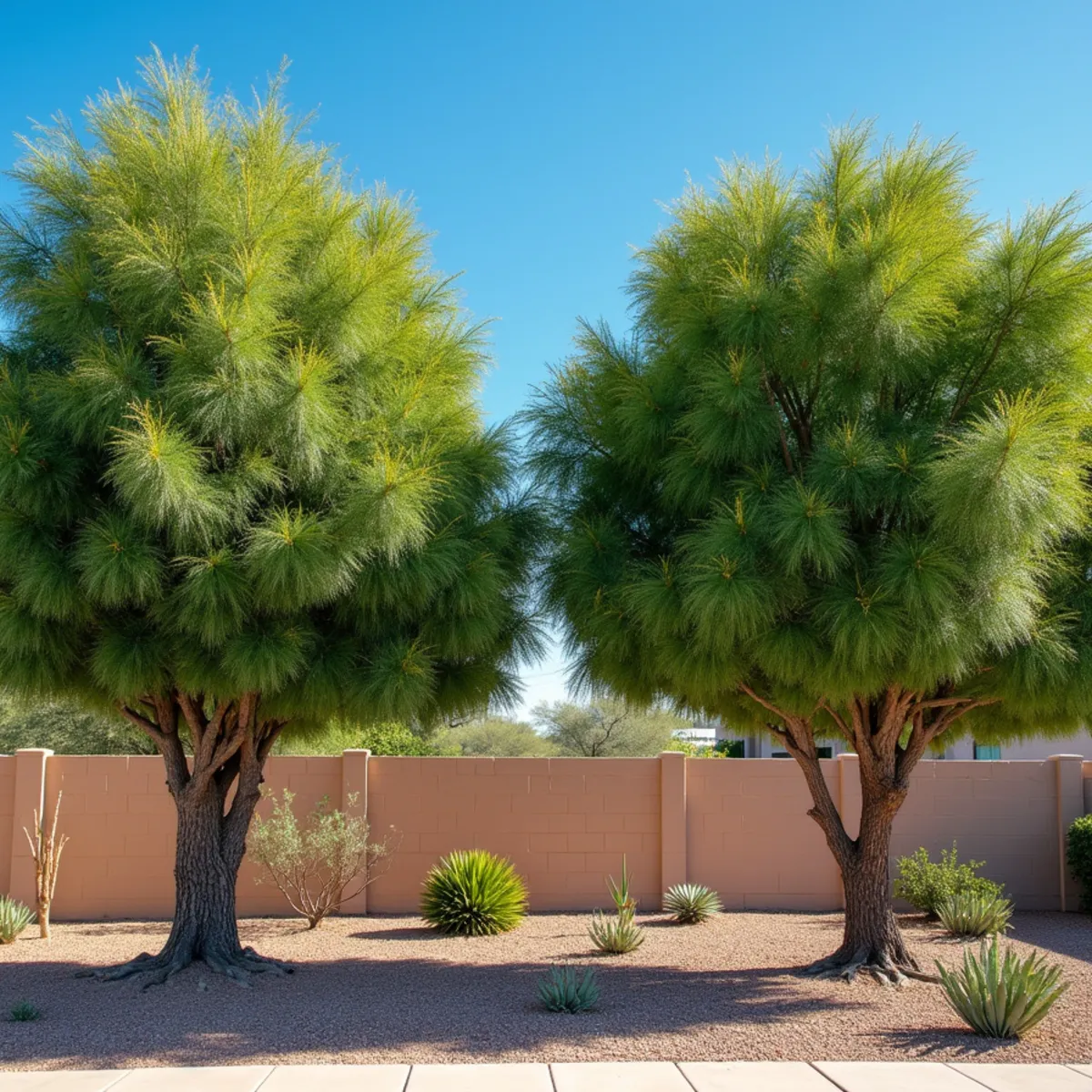
Palo verde and velvet mesquite are the two great desert shade trees, but they differ in roots, monsoon strength, and mess. Here is how to choose for your yard.
Shade is the single best investment you can make in a desert yard — it cools your home, protects your other plants, and makes the space usable in summer. In the Sonoran Desert, two native trees dominate the conversation: the palo verde and the velvet mesquite. Both are tough, low-water, and beautiful, but they grow, root, and behave differently enough that the right choice depends on your lot, your patience, and your tolerance for mess.
Canopy Growth Rate and Shade Coverage Comparison
Both trees grow quickly by desert standards, and the popular hybrid 'Desert Museum' palo verde is among the fastest, reaching 20 to 25 feet with a broad, airy canopy. Its shade is dappled rather than dense — pleasant, but not the deep shade of a broadleaf tree. Velvet mesquite grows to a similar or slightly larger size with a denser, more spreading canopy that casts heavier shade. If your priority is cooling a patio or a west wall, mesquite generally throws more usable shade; if you want a lighter canopy that still lets some plants grow beneath it, palo verde is ideal.
A quick note on varieties, because the names get muddled. The 'Desert Museum' palo verde is a thornless hybrid bred for fast growth, a strong upright form, and a long bloom, and it is generally the best landscape choice over the thorny native foothill and blue palo verdes. With mesquite, the native velvet mesquite (Prosopis velutina) is more storm-worthy and better adapted than the fast, brittle, shallow-rooted Chilean and Argentine hybrids often sold cheaply — those imports are a frequent cause of the monsoon failures we clean up. Choosing the right variety matters as much as choosing the right species.
Spring Flower Display: Desert Museum Palo Verde Gold vs Mesquite Pods
Palo verde is the showstopper. In spring the Desert Museum variety erupts in brilliant golden-yellow blooms that blanket the tree and, briefly, the ground beneath it. It is one of the defining sights of an Arizona spring. Velvet mesquite flowers are subtler — pale yellow catkins — followed by long seed pods through summer. Those pods are a consideration: mesquite drops a significant amount of pod litter that needs raking, which matters over a patio or pool. Palo verde drops spent flowers and fine leaflets instead, a different but real cleanup.
Both trees are also strong performers for wildlife and pollinators, which is a point in their favor if you want a living, humming yard. Palo verde blooms are a magnet for native bees, and mesquite flowers feed pollinators before the pods, in turn, feed birds and other wildlife. That ecological value is part of why both species anchor so many Sonoran-style designs — they earn their space aesthetically and biologically, not just as shade.
Root Architecture: Surface Root Lifting vs Deep Tap Roots
This is the difference that causes the most long-term trouble. Palo verde tends toward shallow, spreading roots that can lift sidewalks, pavers, and pool decks if planted too close to hardscape. Velvet mesquite, given deep and infrequent watering, develops a strong tap root and deeper structure that is generally kinder to nearby paving — but shallow, frequent irrigation can push either tree's roots to the surface and undermine its stability. How you water matters as much as which tree you plant.
Placement is the other half of the root question. As a general guide, keep either tree at least 10 to 15 feet from foundations, pool shells, sidewalks, and sewer laterals, and give the canopy room to reach its mature spread without crowding the house or the neighbor's wall. Planting a fast grower three feet from a pool deck almost guarantees a lifting problem within a decade. Thinking about the mature size on planting day saves an expensive removal later.
Limb Fragility in Monsoon Storms and Pruning Requirements
Every monsoon season we respond to toppled and split desert trees, and palo verde is overrepresented. Its fast growth produces relatively brittle wood, and a heavy, unthinned canopy acts like a sail in a 60-plus-mph microburst. Mesquite wood is denser and generally more storm-resistant, but a top-heavy, poorly pruned mesquite fails too. The protection for both is the same: proper structural pruning and crown thinning on an ANSI A300 standard, done before monsoon season, so wind passes through the canopy instead of pushing it over.
The failure mode differs by species in a way worth knowing. Palo verde more often loses whole limbs or splits at weak, narrow branch unions, while mesquite, with its heavier wood and denser canopy, is more prone to uprooting entirely when the soil is saturated and the roots are shallow. Either way, the two levers you control are the same: thin the canopy so it does not catch wind, and water deeply and infrequently so the roots go down. Get both right and a monsoon that flattens a neglected neighbor's tree passes yours by.
| Factor | Desert Museum Palo Verde | Velvet Mesquite |
|---|---|---|
| Mature size | 20-25 ft, airy canopy | 25-30 ft, denser canopy |
| Shade density | Dappled, lighter | Heavier, more cooling |
| Spring display | Brilliant golden bloom | Subtle catkins, then pods |
| Litter | Flowers and fine leaflets | Seed pods, some varieties thorny |
| Roots | Shallow, can lift hardscape | Deeper tap root if watered deep |
| Monsoon strength | Brittle; needs thinning | Denser wood; still needs thinning |
Water Demands and Longevity in East Valley Subdivisions
Both are genuinely low-water once established, needing only occasional deep soaks through the hottest months. Palo verde is fast but often shorter-lived, while a well-sited velvet mesquite can be a multi-decade anchor tree. In tight subdivision lots, placement is everything: keep either tree well back from foundations, pool decks, and sidewalks, and give the roots room to go deep. Getting the drip layout right from the start is where a well-planned drip irrigation installation pays off for the life of the tree.
So which should you plant? If you want fast shade, a spectacular spring show, and a lighter canopy over a patio, and you have room to keep it away from hardscape, the Desert Museum palo verde is hard to beat. If you want the densest, most cooling shade and a long-lived anchor tree, and you do not mind raking pods, velvet mesquite is the sturdier long-term choice. On many lots the best answer is one of each, placed to shade different exposures, giving you both the palo verde's bloom and the mesquite's deep shade across the year.
As the tree matures, widen the drip line outward so water is delivered near the canopy edge where the active feeder roots are, not clustered against the trunk. Emitters left tight to the trunk for years train roots to stay shallow and central, exactly the pattern that leads to instability. A tree watered deeply at the drip line, a few times a month in summer and less in winter, develops the broad, deep anchor system that shrugs off monsoon wind and rarely needs supplemental water at all once truly established.
Have Our Arborists Source and Plant Your Desert Shade Trees
Choosing the tree is half the job; siting it, planting it correctly, and keeping it structurally sound is the rest. Our native cacti and desert botanical plantings team sources healthy, well-formed specimens and plants them where roots and canopy have room to succeed, and our desert tree crown thinning crew keeps them wind-worthy through monsoon season. We plant and maintain shade trees across Mesa, Scottsdale, and Queen Creek.
Ecosphere Landscaping has been a locally owned, licensed, and insured family business since 2017. Call us at (323) 606-0255 and we will help you choose between palo verde and mesquite for your specific lot, then plant it right.
Talk to a local desert landscaping expert
Serving Mesa & the East Valley since 2017. Get honest, itemized pricing and water-smart advice for your specific yard.
Frequently asked questions
Both are fast for desert trees, and the Desert Museum palo verde is among the quickest, reaching 20 to 25 feet with an airy canopy. Velvet mesquite grows nearly as fast with denser, heavier shade.
Palo verde is more prone to failure because of its fast, brittle wood and sail-like canopy. Mesquite has denser wood, but both need proper crown thinning before monsoon season to let wind pass through.
They can. Palo verde tends toward shallow, spreading roots that lift hardscape when planted too close. Deep, infrequent watering and adequate setback from paving reduce the risk for either species.
It depends on the season. Palo verde drops flowers and fine leaflets, while mesquite drops seed pods that need raking and can have thorns on some varieties. Neither is litter-free.
Both are low-water once established, needing only occasional deep soaks in the hottest months. Deep, infrequent irrigation is key, as it drives roots downward and anchors the tree against wind.
Related services & areas
Service areas