F: Permits & Regulations
HOA-Approved Front-Yard Ideas for the East Valley

Arizona law protects your right to a desert front yard, but your HOA can still enforce design standards. Here is how to plan a xeriscape that passes review the first time.
Here is the reassuring part first: in Arizona, your homeowners association cannot flatly ban desert or xeriscape landscaping in your front yard. Under ARS section 33-1808, an HOA is prohibited from adopting or enforcing rules that prohibit low-water-use, drought-tolerant, or xeriscape landscaping. What an HOA can still do is enforce reasonable design standards, so the goal is not to fight the association but to design a desert front yard that is clearly intentional, tidy, and easy to approve. This guide shows how.
What Does Arizona Law Actually Say About HOAs and Xeriscape?
ARS section 33-1808 addresses political signs, flags, and, importantly for landscaping, it restricts an association's ability to prohibit xeriscaping. In practice this means an HOA cannot require you to keep a thirsty lawn or refuse a conversion to drought-tolerant desert landscaping outright. It does not, however, strip the HOA of all authority. Associations may still adopt and enforce reasonable aesthetic and design guidelines, require plans to go through architectural review, and set standards for things like plant density, maintenance, and materials. The law protects the concept of xeriscape, not a specific messy execution of it.
The practical takeaway is that approval is usually about presentation. An HOA that would reject a bare gravel lot will readily approve a designed xeriscape with defined borders, layered plants, and a clean irrigation plan. If you understand that, the review process becomes a formality rather than an obstacle.
What Do HOAs Approve and Reject in a Desert Front Yard?
Most rejections come down to a few recurring issues that are easy to avoid once you know them. The table below sorts the elements reviewers tend to welcome from the ones that draw a revision request, so you can design toward approval from the start.
| Design element | Usually approved (do) | Often flagged (avoid) |
|---|---|---|
| Ground cover | 2-inch decomposed granite over weed fabric | Bare dirt or a thin, patchy gravel scatter |
| Plant coverage | Layered live plants near entry and windows | An empty rock lot with one or two shrubs |
| Borders | Defined steel, block, or paver edging | Rock spilling onto sidewalks and driveways |
| Plant palette | Approved desert species on the list | Banned or invasive plants; oversized cacti at walks |
| Rock color | Earth tones that match the streetscape | Bright white or unusual colors that clash |
| Irrigation | Neat, buried drip on a controller | Exposed tubing running across the yard |
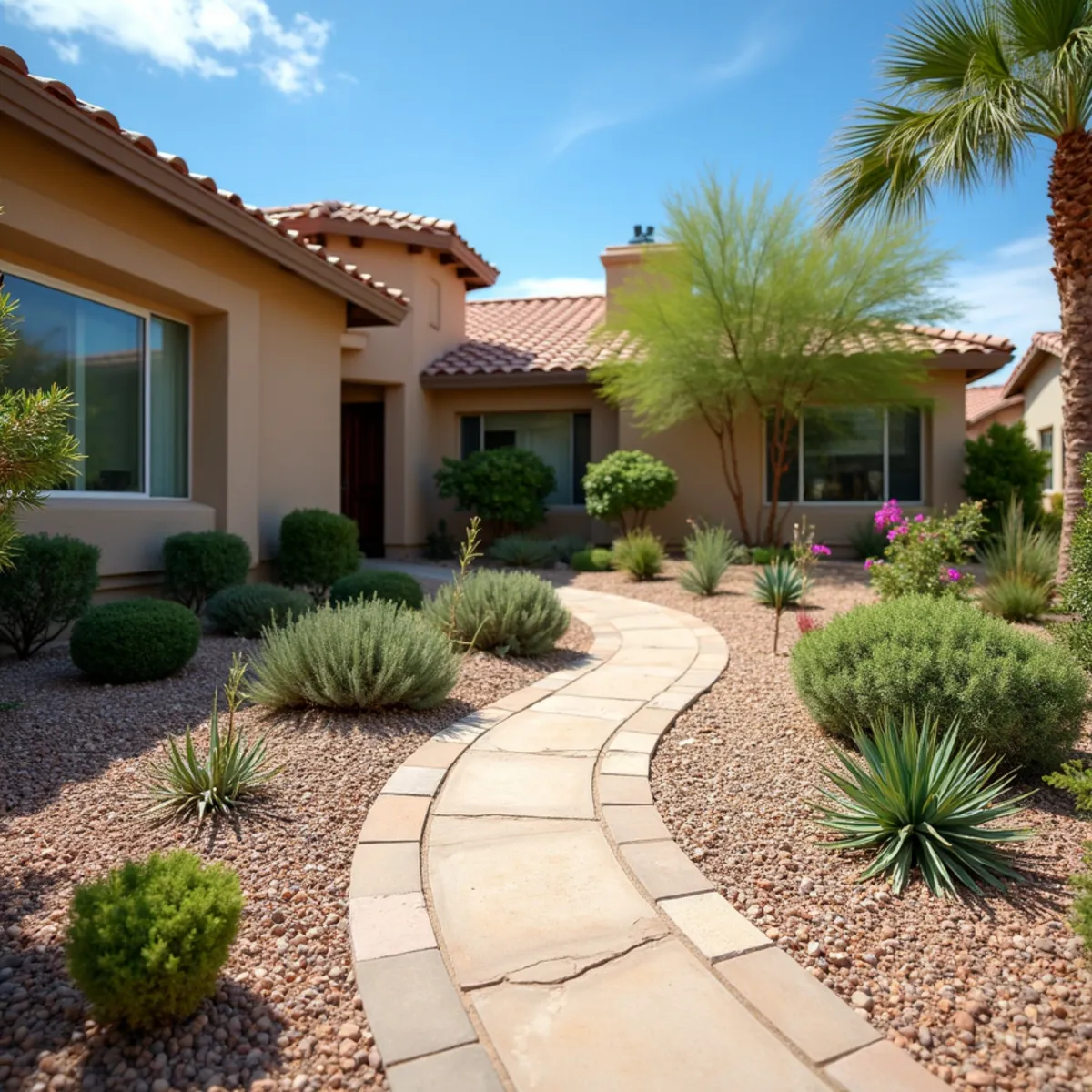
Notice the pattern: HOAs reward intentional design and clean execution and flag anything that reads as neglect or as an eyesore relative to the street. A xeriscape that layers a couple of desert shade trees with mid-size shrubs like Texas sage and desert spoon, low accents such as agave and red yucca, and seasonal color, all held together with crisp borders, satisfies both the water-saving goal and the aesthetic standard at once.
How Do You Design a Front Yard That Passes Review the First Time?
A design that anticipates the reviewer's checklist saves a round of revisions. Focus on the elements that signal care and permanence.
- Layer plants by height so the yard has structure, not a flat field of rock, and concentrate planting where it is seen from the street.
- Define every edge with steel, block, or paver borders so materials stay where they belong.
- Choose an earth-tone decomposed granite that harmonizes with neighboring yards rather than standing out.
- Keep large cacti and thorny plants set back from sidewalks and walkways for safety and clearance.
- Show a buried drip irrigation plan on a controller, since neat, efficient watering is often a review requirement.
- Include a simple plant schedule with your submission so reviewers can confirm species against the approved list.
The most reliable way to clear review is to submit a real plan, not a vague description. Our desert landscape design and xeriscaping team produces the layered planting layout, material selections, and drip plan that architectural committees want to see, which turns approval into a formality. And because a conversion from grass may qualify for a municipal rebate, our turf-to-xeriscape rebate conversion crew documents the removal and install to program standards so the HOA approval and the rebate application line up.
Which Plants Keep an HOA Yard Looking Intentional Year-Round?
Reviewers and neighbors respond to a yard that looks cared for in every season, and a well-chosen desert palette delivers that without a lawn's upkeep. The most approvable front yards layer structure and color across the year: evergreen desert shrubs for consistent form, flowering species for seasonal interest, and a few sculptural accents that give the design a focal point. Because these plants are adapted to alkaline soil and intense heat, they stay presentable with far less water and labor than turf, which is exactly the low-maintenance, water-wise look most communities now prefer.
- Desert shade trees such as palo verde or mesquite for structure and cooling, set back from walks and property lines.
- Mid-size flowering shrubs like Texas sage and desert spoon that carry color through the warm months.
- Low accents such as red yucca, agave, and seasonal wildflowers to soften borders and add texture.
- An earth-tone decomposed granite ground cover over weed fabric that ties the palette together and stays tidy.
The point is coverage and intent. A yard that reads as a designed landscape, with plants grouped and layered rather than dotted at random across an expanse of rock, is what satisfies both the water-saving goal the law protects and the aesthetic standard the HOA is entitled to enforce. Density near the entry, windows, and street matters most, since that is what the review committee and passers-by actually see.
What Happens If Your HOA Pushes Back?
If an association denies a compliant xeriscape plan or tries to require you to keep a lawn, ARS section 33-1808 is on your side, and a calm, documented approach usually resolves it. Put your request in writing, reference the statute, and provide a clean plan with a plant schedule and drip layout so the committee can see the design meets reasonable standards. Most disputes end there, because the association can enforce how a desert yard looks but not whether you are allowed to have one. Keep copies of your submissions and approvals, and if a genuine conflict persists, the association's own dispute-resolution process is the next step. Because rules and procedures vary and change, always confirm your community's current guidelines rather than relying on general summaries.
Design a Front Yard the HOA Will Approve
Your right to a desert front yard is protected, but a clean, well-documented plan is what gets it approved without friction. We design to both your HOA's standards and the desert's realities, and we prepare the submission package that architectural review expects. Ecosphere Landscaping serves East Valley communities including Gilbert and Chandler, and we are locally owned since 2017, licensed, and insured. Call (323) 606-0255 to plan an HOA-ready front-yard conversion, and remember to confirm your community's current landscaping rules before you begin.
Talk to a local desert landscaping expert
Serving Mesa & the East Valley since 2017. Get honest, itemized pricing and water-smart advice for your specific yard.
Frequently asked questions
No. Under ARS section 33-1808, an Arizona HOA cannot prohibit low-water, drought-tolerant, or xeriscape landscaping. It can, however, enforce reasonable design standards, so a tidy, well-planned desert yard is the way to secure approval.
It restricts an HOA from prohibiting xeriscape and drought-tolerant landscaping, protecting the concept of a desert yard. It does not remove the HOA's ability to require architectural review or enforce reasonable aesthetic and maintenance standards.
Almost always for presentation, not the concept. Bare dirt, a sparse gravel lot with few plants, undefined borders, exposed drip tubing, or clashing rock colors draw revision requests. A layered, well-edged design usually passes.
Yes, if your community has architectural review. Request the current landscaping guidelines and submit your plan for written approval before any work, since state law sets the floor but your CC&Rs control the details and can change over time.
Related services & areas
Service areas