C: Problem & Diagnosis
Why Desert Plants Turn Yellow: Fixing Iron Chlorosis & Salt Burn
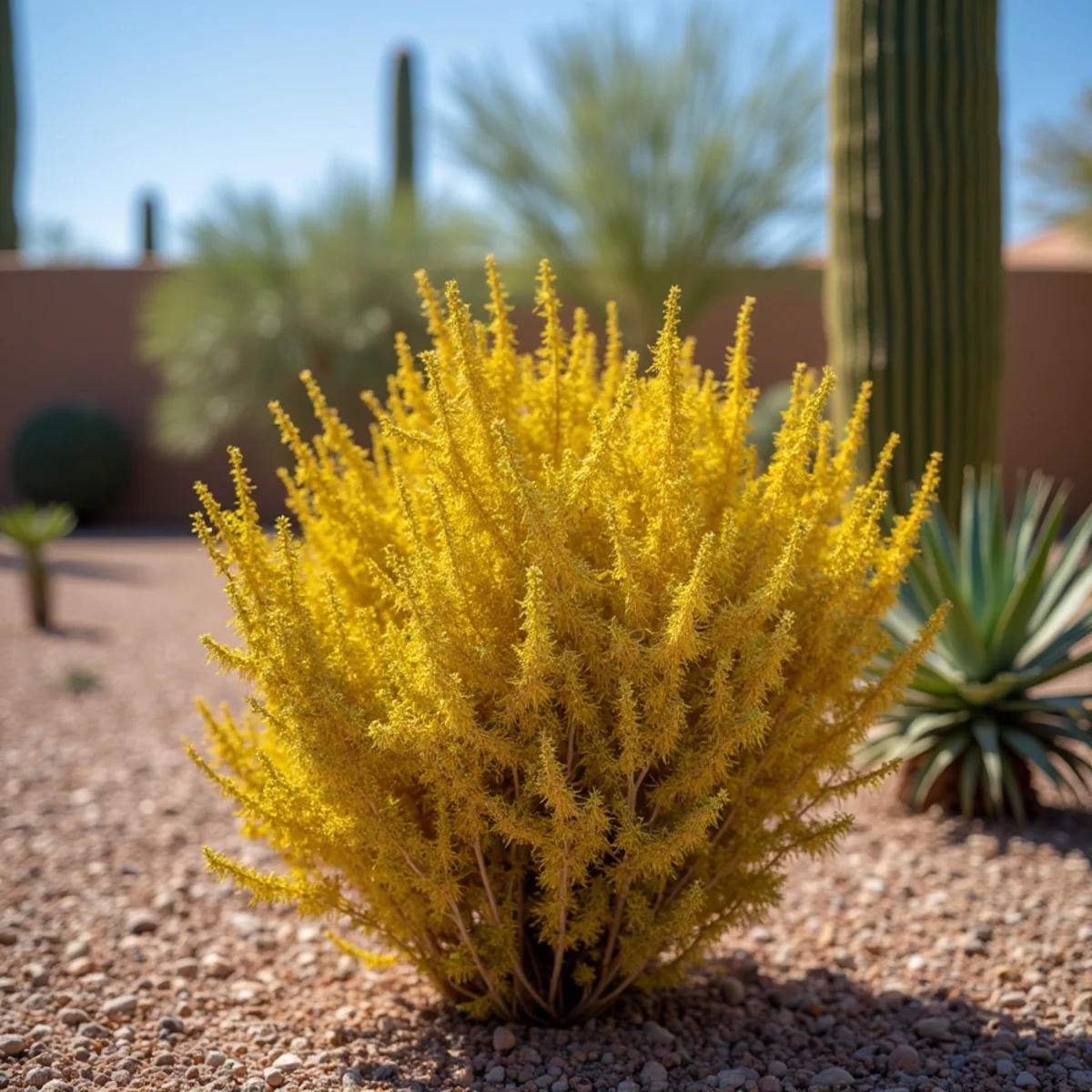
Yellowing desert plants are usually telling you about your soil, not your watering. How to read the pattern, distinguish iron chlorosis from salt burn, and correct both.
When a shrub or tree starts going yellow in a Valley yard, the first instinct is usually to water more, and that is frequently the worst thing you can do. Yellowing in desert plants is most often a soil chemistry problem, either iron that the plant cannot absorb or salt that is burning the roots. Learning to read the pattern of the yellowing tells you which one you are dealing with.
Diagnosing Yellow Leaves: Iron Deficiency vs Overwatering Symptoms
The pattern of the yellow is the clue. Iron chlorosis produces a distinctive look: the leaf tissue turns yellow while the veins stay green, called interveinal chlorosis, and it shows up on the newest growth first. Overwatering, by contrast, tends to yellow older leaves broadly, often with wilting despite wet soil, because drowned roots cannot function. Salt burn shows as brown, crispy leaf tips and margins. Reading these signatures correctly is the whole game, because the treatments are opposite.
The reason diagnosis matters so much is that the most common instinct, watering more, is exactly wrong for two of the three causes and neutral for the third. Water more on an overwatered plant and you accelerate its decline; water more on a salt-burned plant and, unless you are deliberately flushing, you can concentrate salts further as shallow water evaporates. Only a genuinely thirsty plant benefits from more water, and thirst has its own look: uniform dullness, drooping, and dry soil, not the vein-and-tissue contrast of chlorosis. Spending two minutes reading the leaves before reaching for the hose saves plants.
| Symptom pattern | Likely cause | General direction |
|---|---|---|
| Yellow between green veins, newest leaves first | Iron chlorosis | Correct soil / add chelated iron |
| Whole older leaves yellow, wilting in wet soil | Overwatering / root suffocation | Water less, improve drainage |
| Brown crispy tips and edges | Salt burn | Deep-flush the root zone |
| Overall pale with slow growth | General nutrient lockout | Address alkaline pH |
How High Alkaline Desert Soil Locks Out Micronutrients
Arizona soils are typically alkaline, often around pH 8.0 or higher. The catch is that iron and several other micronutrients become chemically unavailable to plants at high pH, even when the iron is physically present in the soil. So a plant can be surrounded by iron and still starve for it. This is why non-native and borderline plants chlorose so readily here, and why simply adding ordinary iron products to alkaline soil often does little; the high pH locks the new iron up too.
The same alkalinity limits other nutrients too, including manganese and zinc, so a struggling plant may be short on more than iron. It also explains why acid-loving plants sold at big-box stores, the kind that thrive in other regions, are a constant disappointment here; they are fighting the soil chemistry every day. Choosing plants that evolved for alkaline desert soil sidesteps the whole battle, which is a large part of why native and desert-adapted species are the low-maintenance backbone of a well-designed Valley yard.
Treating Iron Chlorosis with Chelated Iron (EDDHA) Applications
The effective tool against chlorosis in high-pH soil is a chelated iron product, and the chelate type matters. EDDHA-chelated iron keeps iron available even at the alkaline pH found in Valley soils, whereas cheaper chelates break down and lose effectiveness above roughly pH 7. Applied as a soil drench at the root zone according to label rates, EDDHA iron can green a plant back up over a few weeks. For choosing plants that resist chlorosis in the first place, native and desert-adapted species are the durable answer; our native cacti and desert botanical plantings team selects species suited to alkaline soil.
Salt Accumulation from Tap Water: Flushing Desert Root Zones
The other common cause of yellowing and leaf-tip burn is salt. Municipal tap water carries dissolved salts, and with little rain to rinse them through, they concentrate in the root zone every time shallow watering evaporates. Drip systems that apply just enough water to wet the surface can make this worse, leaving a salt ring right where the roots live. The remedy is periodic deep flushing: applying a longer, heavier soak that pushes accumulated salts down below the root zone. Doing this a few times a year, and watering deeply rather than frequently, keeps salts from building to burning levels.
Fertilizer can quietly add to the salt load, since most fertilizers are salts themselves, so over-feeding a stressed plant often makes the burn worse rather than better. If you see crispy tips spreading inward from the leaf margins, resist the urge to fertilize and flush instead. The natural monsoon rains help by leaching salts through the soil, which is one reason plants often perk up after a good summer storm; deep manual flushing simply mimics that effect on your own schedule during the long dry stretches.
Applying Chelated Iron the Right Way
Even the correct product underperforms if it is applied poorly. Chelated iron works best as a soil drench delivered to the root zone and watered in, following the label rates for the plant size rather than guessing. A foliar spray can green up leaves quickly as a short-term boost, but it treats only the leaves that are already there, not the new growth, so soil application is what produces a lasting correction. Expect results over a few weeks, not overnight, and address the underlying cause, whether that is soil pH, a poor plant choice, or a watering problem, so the chlorosis does not simply return.
Adjusting Drip Emitter Placement as Desert Trees Mature
A drip layout that was correct for a young shrub becomes wrong as the plant grows. Emitters left at the original trunk position water the base while the active feeder roots have moved out toward the canopy edge, so a mature tree effectively goes underwatered and its roots never spread properly. As plants mature, emitters should be moved outward toward the drip line and added to match the larger root zone. This is routine tuning that a good irrigation service performs during maintenance; our drip irrigation installation and repair crew relocates and adds emitters as your plants grow.
This single oversight is behind a lot of mystery decline in established yards. A tree that thrived for years slowly yellows and thins, and the owner adds fertilizer or more frequent watering, when the real fix is simply moving the water to where the roots now are. Watering at the trunk also keeps the crown wet and encourages roots to circle the base rather than spread and anchor, which ties back to the storm-stability problems desert trees face. Adjusting emitter placement as plants mature is one of the highest-value, lowest-cost pieces of irrigation maintenance there is.
Preventing Yellowing Before It Starts
Treatment works, but prevention is cheaper and less stressful for the plants. A few habits keep yellowing rare:
- Choose native and desert-adapted species suited to alkaline soil rather than acid-loving imports.
- Water deeply and infrequently to push salts down and encourage deep roots.
- Flush the root zone a few times a year to clear accumulated salts from tap water.
- Move and add emitters outward as plants grow so roots always have water where they need it.
- Avoid overwatering and over-fertilizing, both of which cause the very symptoms they seem meant to fix.
Book a Plant Health Diagnostic Visit with Our Team
Because yellowing has several possible causes with opposite fixes, a correct diagnosis on site saves plants and money. We evaluate the leaf pattern, soil, and irrigation together, then recommend the specific correction. Ecosphere Landscaping is locally owned, licensed, and insured, and we serve Mesa, Chandler, and Tempe. The University of Arizona Cooperative Extension is also an excellent free reference for desert plant care.
Watching your plants turn yellow and not sure why? Call Ecosphere Landscaping at (323) 606-0255 to schedule a plant health diagnostic visit.
Talk to a local desert landscaping expert
Serving Mesa & the East Valley since 2017. Get honest, itemized pricing and water-smart advice for your specific yard.
Frequently asked questions
Most often iron chlorosis, where alkaline soil locks out iron so leaves yellow between green veins, or salt burn, which browns leaf tips. Overwatering can also yellow older leaves. The pattern tells you which, and the fixes are different.
Usually not. Yellowing is more often a soil chemistry issue than thirst, and overwatering can cause its own yellowing by drowning roots. Diagnose the pattern first; adding water can make chlorosis and salt problems worse.
EDDHA-chelated iron, because it stays available to plants at the high pH found in Valley soils. Cheaper iron products and weaker chelates often fail here because the alkaline soil neutralizes them.
Periodically deep-flush the root zone with a longer, heavier watering that pushes salts below the roots, and water deeply rather than frequently. Doing this a few times a year prevents the salt-tip burn caused by tap water.
Related services & areas
Service areas