D: Material Comparisons
Decomposed Granite vs River Rock for Phoenix Desert Yards
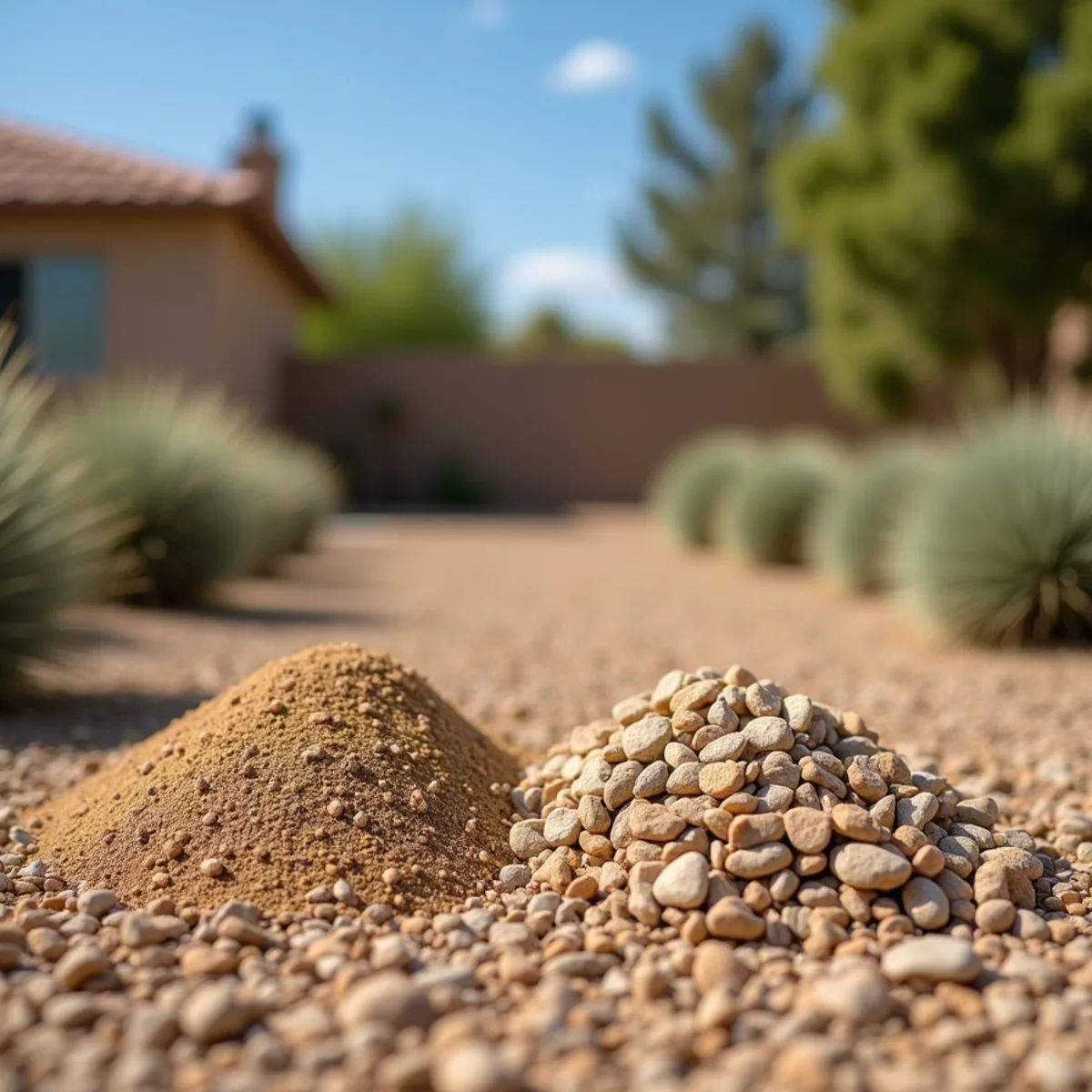
Decomposed granite and river rock both cover a desert yard, but they behave very differently in heat, rain, and underfoot. Here is how to choose for a Phoenix landscape.
Rock is the backbone of nearly every low-water yard in the Valley, but the choice between decomposed granite and river rock trips up a lot of homeowners. They look similar in a photo, yet they perform very differently once the summer sun and monsoon storms arrive. Choosing the wrong one for the wrong spot leads to washouts, hot patios, and surfaces nobody wants to walk on. This guide compares the two across the factors that actually matter in Phoenix.
Aesthetic Variations: Earth-Toned DG vs Polished River Cobble
Decomposed granite (DG) is crushed rock, typically in a 1/4-inch-minus grade, that ranges from warm gold and rose to gray and brown. It reads as a natural, understated desert floor and blends seamlessly with native plantings. River rock is smooth, rounded cobble in larger sizes, from 3/4-inch pea gravel up to 3-inch to 5-inch cobble, in polished grays, tans, and multicolor blends. River rock draws the eye and works beautifully as an accent — dry creek beds, borders, and drainage channels — but a whole yard of it can feel busy and hard to maintain.
Color choice is not just taste, either. In the desert, lighter earth tones tend to age more gracefully because dust and sun-fade show less on them, while very dark or very saturated rock can look tired within a few seasons as fine silt settles into it. DG's matte, granular texture also photographs and reads as more contemporary and cohesive across a large area, which is why it dominates modern xeriscape design, while river rock's reflective, varied surface is best deployed in deliberate, contained gestures rather than wall to wall.
Walking Comfort and Stability: Compacting 1/4-Minus Granite
This is the biggest practical difference. Because DG contains fine particles alongside the crushed rock, it compacts into a firm, stable surface you can walk, wheel a cart across, or set patio furniture on. River rock never compacts — the rounded stones shift underfoot, roll into lawns and pool areas, and are genuinely difficult to walk on, especially the larger cobble sizes. For pathways, seating areas, and anywhere people move, compacted DG wins comfortably.
Getting that firm surface takes more than dumping and raking. Properly installed DG is spread in lifts, moistened, and compacted with a plate compactor over a graded base, sometimes with a stabilizer binder added for high-traffic paths. Skip the compaction and even DG stays loose and tracks into the house on shoes. This is where professional installation earns its keep — the same material feels completely different depending on whether it was compacted correctly.
Accessibility matters here too. If anyone in the household uses a walker, wheelchair, or stroller, loose river rock is effectively impassable, while compacted DG provides a firm, navigable surface. It is worth thinking about not just how the yard looks today but how it will serve everyone who uses it.
Monsoon Rain Resistance: Which Rock Resists Washing Downhill?
During a 60-mph microburst dumping an inch of rain in twenty minutes, loose material moves. Fine, uncompacted DG can rill and wash on any real slope, carving channels and collecting in low spots. Properly compacted DG on flat or gently graded ground holds well. On slopes and in any channel that carries runoff, larger river rock is the durable choice — the heavier, rounded stones stay put and actually slow the water. Matching rock size to grade and water flow is central to how we plan a yard's drainage.
Thermal Absorption: Heat Radiated Back into Home Walls and Patio
All rock stores and re-radiates heat, but color and mass change how much. Light-colored rock reflects more sunlight and runs cooler than dark rock, which is worth remembering along south- and west-facing walls where reflected heat drives up cooling bills and stresses plants. Large cobble has more thermal mass and holds heat later into the evening than a thin DG layer. If a seating area or a plant bed sits against a hot wall, a lighter DG or shaded groundcover keeps the microclimate more livable than dark river rock.
This heat effect is not trivial in a Valley summer. A large expanse of dark rock against a west wall can turn the adjacent room into an oven by late afternoon and shorten the life of nearby plants that would otherwise be desert-hardy. Thoughtful designers use rock color as a climate tool, keeping the hottest exposures lighter and reserving darker accent stone for shaded or north-facing areas where the extra heat load does not matter.
Cost Differences Per Ton Delivered Across Maricopa County
Both materials are sold by the ton delivered, and pricing swings with color, source quarry, and haul distance. As planning benchmarks for the Phoenix metro rather than firm quotes, use the ranges below and expect specialty and designer colors to sit at the higher end.
| Factor | Decomposed Granite | River Rock |
|---|---|---|
| Typical size | 1/4-inch-minus (fines + crushed rock) | 3/4-inch pea to 3-5 inch cobble |
| Walkability | Firm once compacted | Loose, shifts underfoot |
| Slope / washout | Best on flat, compacted ground | Best in swales, creek beds, slopes |
| Heat | Cooler in light colors, thin layer | Higher thermal mass, holds heat |
| Weed control | Needs pre-emergent + fabric | Needs pre-emergent + fabric |
| Relative cost | Generally lower per ton | Generally higher, varies by color |
Delivered decomposed granite per ton varies by color and haul distance, and river rock generally costs more for the same coverage because the stones are heavier and cover less ground per ton. Whichever you choose, the material is only part of the price — proper grading, weed fabric, and edging determine whether it lasts.
Coverage math matters when you budget. As a rough rule, a ton of DG covers roughly 70 to 100 square feet at a proper 2-inch depth, and cobble covers less per ton because of its size and weight. Standard colors sourced from nearby quarries deliver cheaper than specialty or designer blends hauled across the metro. Because both are sold by weight, the farther the haul, the more you pay for the same coverage, so choosing a color available closer to the East Valley can meaningfully lower delivered cost.
Both Rocks Still Need a Weed Strategy
Neither DG nor river rock is weed-proof. Windblown silt collects between the stones and creates a seed bed on top, so both need woven geotextile fabric underneath and a timed pre-emergent program to stay clean. River rock can actually be harder to keep tidy because leaves and debris settle deep between the cobble and cannot be raked out easily.
Edging is the other detail that separates a rock yard that stays sharp from one that muddles together. Steel, concrete, or masonry edging keeps DG from migrating into planting beds and stops cobble from rolling onto walkways and into the pool. Without a defined edge, the two materials creep into each other and into the lawn or patio, and the crisp look you paid for blurs within a year. Whichever rock you choose, budget for proper edging as part of the install rather than an afterthought.
Request a Free Rock and Granite Color Sample Consultation
Choosing rock is easier with samples in hand and a plan for where each material belongs. Our decomposed granite and rock landscaping crew installs both materials to proper depth over commercial fabric, and our desert landscape design and xeriscaping team maps out where DG, cobble, and plantings work together. We serve homeowners across Mesa, Scottsdale, and Ahwatukee.
Ecosphere Landscaping is a locally owned, licensed, and insured family business founded in 2017. Call us at (323) 606-0255 for a free color consultation and a recommendation matched to your yard's slope, sun exposure, and how you actually use the space.
Talk to a local desert landscaping expert
Serving Mesa & the East Valley since 2017. Get honest, itemized pricing and water-smart advice for your specific yard.
Frequently asked questions
Decomposed granite. Its fine particles compact into a firm, stable surface. River rock stays loose and rolls underfoot, so it is uncomfortable to walk on and better reserved for accents and drainage.
Larger river rock has more thermal mass and re-radiates heat later into the evening. Light-colored, thinner DG runs cooler, which matters most along hot south- and west-facing walls.
On slopes and in drainage channels, larger river rock stays put and slows runoff. Fine DG can wash and rill on grade, so it performs best on flat, properly compacted ground.
No. Both need woven geotextile fabric underneath and a timed pre-emergent herbicide program, because windblown silt forms a seed bed on top of any rock over time.
Both are sold by the ton delivered, with price varying by color and haul distance. River rock generally costs more per equivalent coverage. Treat any figure as a planning benchmark, not a quote.
Related services & areas
Service areas