D: Material Comparisons
Artificial Turf vs Natural Desert Xeriscaping: The Arizona Verdict
Artificial turf and desert xeriscaping both cut your water bill, but they feel completely different in July. Compare heat, pets, HOA rules, and cost before you commit.
When homeowners finally give up on thirsty Bermuda grass, the choice usually comes down to two paths: artificial turf that looks like a lawn without the water, or a native desert xeriscape of drought-tolerant plants, rock, and hardscape. Both slash outdoor water use, but they behave in opposite ways under a 104-degree Arizona July. Here is an honest comparison so you can pick the right one for how you live.
Surface Temperatures: How Hot Artificial Grass Gets in July (160°F+)
This is the fact that surprises people most. Artificial turf has no way to cool itself — it cannot transpire the way a living plant does — so under full desert sun its surface can climb well past 150°F and often over 160°F on the hottest afternoons. That is hot enough to be uncomfortable or unsafe for bare feet and pet paws, and it radiates heat back into your yard and home. A living xeriscape, by contrast, stays far cooler: shaded soil, plant transpiration, and lighter rock temper the microclimate rather than amplifying it.
The heat also affects the turf itself. Prolonged exposure to that kind of surface temperature can prematurely age the fibers, flatten the blades, and, near reflective low-E windows, actually melt turf where concentrated sunlight bounces off the glass. That is a real and documented problem in the Valley, and it is not covered by every product warranty. So the same sun that makes turf uncomfortable can also shorten the lifespan of the investment.
Water Conservation: Zero Water vs Low-Water Drip Plants
Both options are a massive improvement over natural sod. Artificial turf uses essentially zero irrigation water, aside from the occasional rinse. A native xeriscape is not zero-water, but it is low-water: established desert plants on an efficient drip system need only periodic deep watering. The difference between them is small compared with the water either one saves against a traditional lawn. If absolute minimum water use is the single goal, turf edges it out; if you want living habitat and cooling, xeriscape delivers far more per gallon.
There is a broader environmental ledger worth weighing, too. A xeriscape supports pollinators, birds, and beneficial insects, sequesters some carbon, and returns organic life to the soil. Turf is a manufactured product with a manufacturing footprint, and at the end of its roughly ten-to-fifteen-year life it becomes landfill plastic that is difficult to recycle. Neither fact should decide the question on its own, but they are part of an honest comparison, especially for homeowners choosing xeriscape partly for conservation reasons in the first place.
Pet Usability: Managing Dog Urine Odors in High Heat
Dog owners feel this one quickly. Urine drains through turf into the base, but in high heat the residue can develop a strong ammonia odor that requires regular rinsing and occasional enzyme treatment to control. Turf also needs a proper permeable base and infill designed for pets. In a xeriscape, waste is handled on open granite or planting beds that rinse naturally and never trap odor the same way. Neither is maintenance-free for pets, but they fail differently — turf needs cleaning, xeriscape needs the occasional rake.
On the flip side, turf does give dogs a soft, mud-free surface year-round, which is a genuine benefit for high-traffic play. The key is specifying a pet-rated system from the start: an antimicrobial infill, a free-draining aggregate base, and a deodorizing rinse routine. Cutting corners on the base is what turns a pet turf area into a smell problem within a summer. If dogs are the main reason you want green space, a small, well-built, shaded turf pad usually beats trying to keep a whole lawn.
HOA Rules and Community Guidelines Across the East Valley
Rules vary community to community, and this often decides the question. Many East Valley HOAs welcome or even encourage xeriscape conversions, and Arizona law limits their ability to ban low-water landscaping outright. Artificial turf is more variable — some associations restrict it, require specific products, or limit where it can go, particularly in front yards. Always check your CC&Rs and your architectural review committee's approved materials before you buy. We help homeowners prepare compliant submission packets either way.
Maintenance expectations differ enough that they deserve their own thought before you commit. Turf needs periodic brushing to keep the blades upright, infill top-ups over time, debris blowing, and, with pets, a rinse routine, and it faces a full replacement at the end of its service life. A xeriscape asks for occasional pruning, a granite rake and refresh every few years, and drip-system checks, but it has no replacement clock and generally grows into itself, needing less attention as plants mature. Neither is truly zero-maintenance, and picturing your realistic upkeep habits is a better predictor of satisfaction than the showroom photo.
Side-by-Side: The Arizona Verdict
| Factor | Artificial Turf | Desert Xeriscape |
|---|---|---|
| July surface heat | 150-160°F+ in full sun | Cooler; shade + transpiration |
| Water use | Essentially none | Low; periodic deep drip |
| Pet odor | Needs rinsing/enzyme in heat | Rinses naturally on rock |
| Living habitat | None | Supports pollinators and birds |
| Lifespan | Roughly 10-15 years, then replace | Plants mature and improve |
| Typical cost | $8-$15/sq ft installed | $5-$15/sq ft installed |
Those cost figures are planning benchmarks for the Phoenix metro, not firm quotes. Turf carries a higher upfront cost and a replacement clock of roughly ten to fifteen years; a xeriscape costs less to install on average and generally improves as plants mature.
The verdict, then, depends on how you actually use the space. If you need a soft, always-green surface for kids or dogs in a specific spot, turf earns its place there, provided you shade it and build the base correctly. If your goal is a cooler, living, lower-maintenance yard that saves water and gets better with age, a native xeriscape wins across almost every category that matters in the Arizona heat. For most homeowners the honest answer is not one or the other but a thoughtful blend that puts each material where it performs best.
Blended Design: Combining Turf Play Areas with Rock Borders
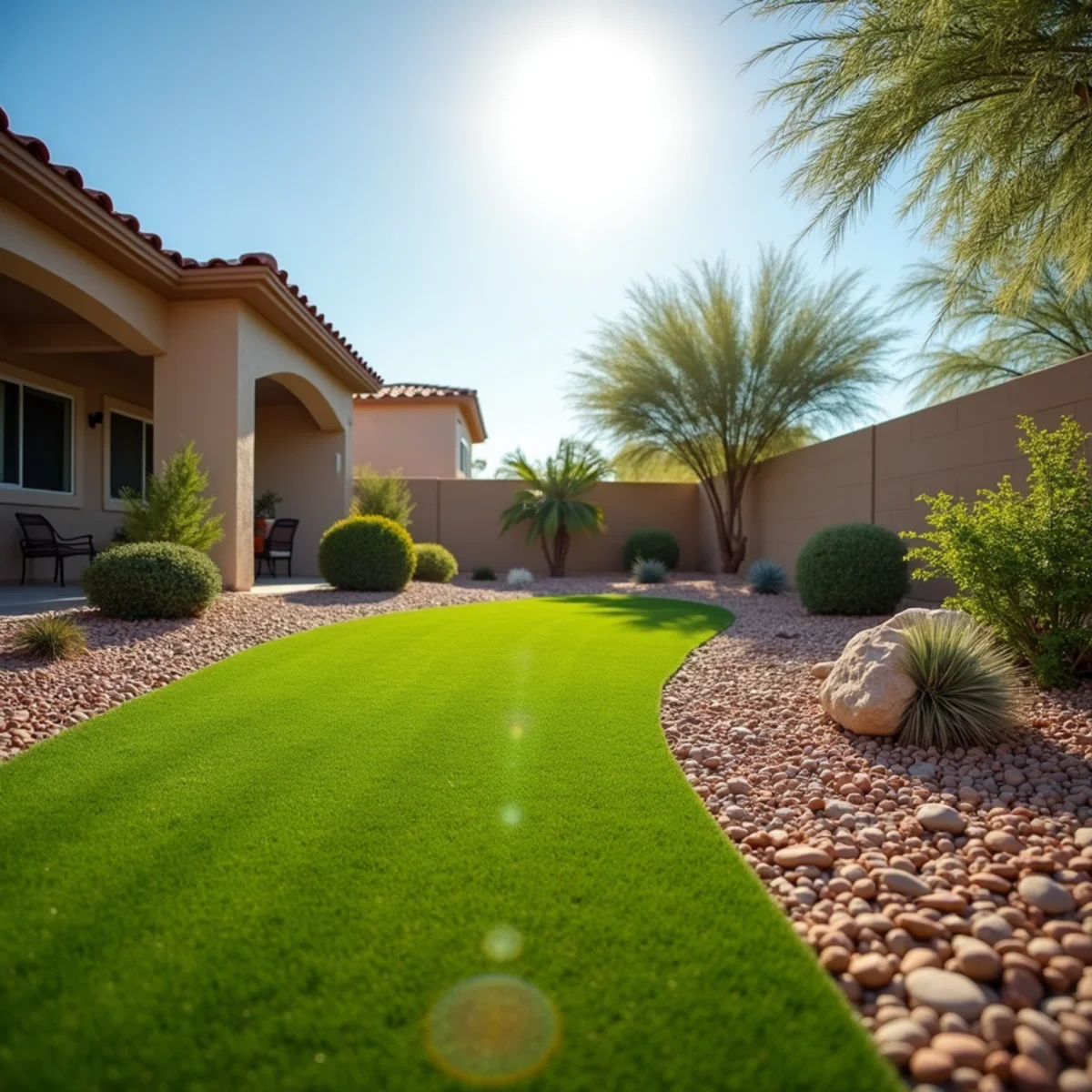
You do not have to choose one for the entire yard, and most of our happiest clients do not. A small, shaded turf pad gives kids and dogs a soft play surface, while the surrounding yard is a low-water desert design of native plants, DG, and cobble borders. This hybrid approach keeps the usable green where you need it and eliminates it where it would just bake in the sun and waste money. Our desert landscape design and xeriscaping team plans these blends around your sun exposure and how your family uses the space.
The design details are what make a blend look intentional rather than patched together. A clean header board or a cobble border separates the turf from the planting beds, a shade tree positioned to the south or west keeps the turf usable through the afternoon, and repeating a couple of key plant species around the pad ties it into the wider desert palette. Done well, the turf reads as one deliberate element in a cohesive desert yard, not as a leftover scrap of lawn.
Explore Hybrid Desert Design Options with Ecosphere
If you are removing grass, you may also qualify for savings. Our turf-to-xeriscape rebate conversion service handles the design, the removal, and the paperwork, and the City of Mesa rebate can reach up to $2,100 for eligible conversions — verify current eligibility with the city. We serve Mesa, Gilbert, and Chandler.
Ecosphere Landscaping is a locally owned, licensed, and insured family business founded in 2017, and our approach is conservation-minded by default. Call us at (323) 606-0255 to talk through turf, xeriscape, or the smart blend of both for your yard.
Talk to a local desert landscaping expert
Serving Mesa & the East Valley since 2017. Get honest, itemized pricing and water-smart advice for your specific yard.
Frequently asked questions
In full desert sun, turf surface temperatures can exceed 150°F and often top 160°F on the hottest July afternoons. It cannot cool itself, so it is best installed in shaded areas rather than open, west-facing exposures.
Artificial turf uses essentially no irrigation water, while xeriscape is low-water rather than zero. Both save dramatically compared with a natural lawn, so the difference between them is small next to what either saves.
Arizona law limits an HOA's ability to prohibit low-water landscaping outright, though the association can still require design review and approve materials. Artificial turf rules vary more, so always check your CC&Rs first.
It works, but urine odor can build in high heat and requires regular rinsing and occasional enzyme treatment, plus a proper pet-rated base and infill. Open desert areas rinse more naturally and trap less odor.
Yes, and it is often the best answer. A small shaded turf pad for play plus a surrounding low-water desert design gives you usable green where you need it without baking an entire yard of turf in the sun.
Related services & areas
Service areas