C: Problem & Diagnosis
Weeds Invading Your Desert Rock? Fixing Broken Underlayment
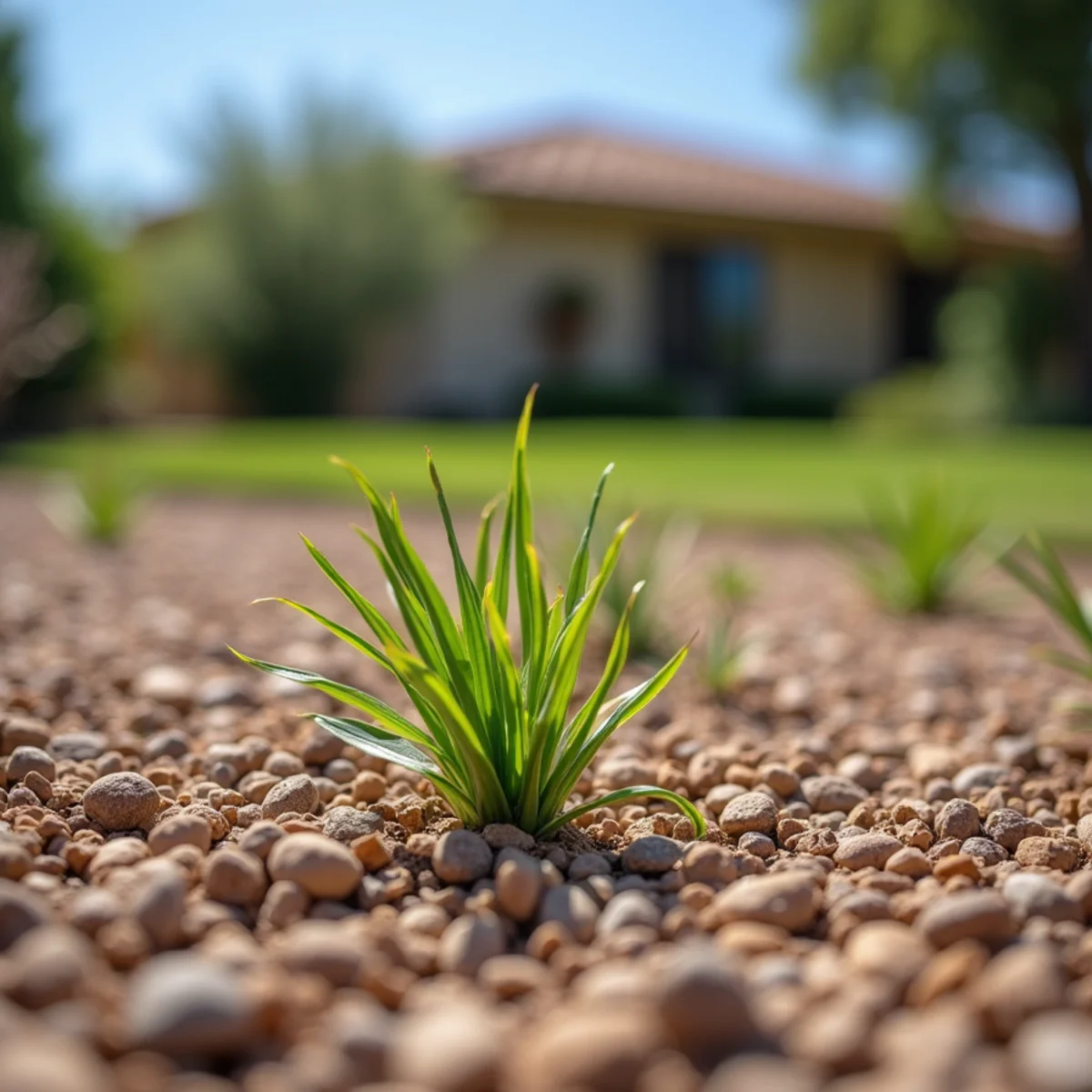
Weeds keep pushing through your rock yard even though there is fabric underneath. Here is why the barrier fails in the desert and how to restore a clean, weed-free look.
You laid down rock to escape the endless chore of mowing and weeding, yet every spring your decomposed granite sprouts a green fuzz of spurge, London rocket, and stinknet. It is one of the most common frustrations we hear from East Valley homeowners, and the fix is rarely as simple as pulling what you see. Understanding why weeds thrive on top of rock — even over fabric — is the first step to a yard that actually stays clean.
Why Weeds Grow on Top of Decomposed Granite Even with Fabric
Most people assume weed fabric is a permanent shield. In the Sonoran Desert it is not. Weed barrier only stops seeds that are already in the soil beneath it from reaching sunlight. It does nothing about the seeds that land on top of the rock, and in a windy, dusty climate like Mesa's, that is where the real problem begins. Over a few seasons, a shallow layer of soil builds up right on the surface of your granite, and weeds root into that layer without ever touching the fabric below.
Dust and Organic Silt Blown into Rock: The Perfect Seed Bed
Every haboob and monsoon microburst carries fine silt across the Valley and drops it into the gaps between your granite particles. Add decomposing leaf litter from nearby trees, grass clippings, and airborne organic matter, and within two to three years you have a thin, fertile seed bed sitting directly on the rock surface. Desert weeds are opportunists — their seeds need almost nothing to sprout, and this shallow layer of organic silt gives them exactly the toehold they need.
This is also why yards that are never refreshed get progressively weedier. The silt layer keeps thickening, the granite compacts and darkens, and each year offers a richer bed for germination than the last. The fabric underneath can be perfectly intact and you will still fight weeds all season.
The Usual Suspects: Which Desert Weeds You Are Fighting
Knowing what you are dealing with helps you time your defense. In the East Valley the biggest offenders arrive on a predictable schedule. Winter annuals such as London rocket, mustard, and cheeseweed (little mallow) germinate with the cooler, wetter months and bolt in early spring. Warm-season weeds like spotted spurge, purslane, and tumbleweed (Russian thistle) explode with summer heat and monsoon moisture. And stinknet, an aggressive invasive that has spread across the Valley, forms dense mats and yellow button flowers that are both a fire hazard and a pollen problem.
Each of these produces enormous seed counts, so a single plant left to flower reseeds your rock for years. That is the real reason spot-pulling never gets ahead of the problem: for every weed you see, the surface silt already holds thousands of seeds waiting for the next window. Breaking that cycle takes prevention, not reaction.
Cheap Plastic vs Commercial Woven Geotextile Weed Barrier
Not all barriers are equal, and the material under your rock matters enormously for how the whole system ages. The two most common choices could not be more different in the desert.
- Cheap plastic sheeting: It is impermeable, so it traps water and forces monsoon runoff to sheet across the surface, washing rock and silt into low spots. It also breaks down under UV wherever it is exposed, tearing into brittle flakes within a couple of seasons.
- Woven geotextile fabric: A commercial-grade woven barrier lets water and air pass through to plant roots while still blocking light to weed seeds below. It resists tearing, holds up to UV far longer, and stays put under a proper 2-inch rock layer.
When we install rock as part of our decomposed granite and rock landscaping service, we use woven geotextile under a full 2 inches of granite. The rock depth is not cosmetic — it shades the fabric from UV and starves surface weeds of the loose bed they need.
Pre-Emergent Herbicide Timelines: Preventing Spring and Winter Weeds
Because fabric cannot stop top-down germination, the real workhorse in a desert rock yard is a well-timed pre-emergent herbicide. Pre-emergents create a chemical barrier that prevents seeds from developing once they sprout — but only if they are applied before the weeds germinate, and only if they are watered in and reapplied on schedule.
In the Phoenix metro, two windows matter most. A late-summer to early-fall application (roughly September into October) targets winter annuals like London rocket and mustard. A late-winter application (February into early March) heads off the spring flush of spurge, pigweed, and stinknet before the heat arrives. Miss either window and you are back to hand-pulling.
Pre-emergents also have to be watered in to work. The product needs to move off the granite surface and into the top layer of soil where seeds germinate, so a light irrigation or a natural rain within a day or two of application activates the barrier. Applied to bone-dry rock and left there, much of it simply blows away or breaks down in the sun before it ever forms a barrier. This is one of the most common reasons a homeowner sprays and still sees weeds a month later.
Whatever weeds do slip through get easier to handle if you catch them small. Pulling a young weed before it flowers removes it before it can reseed, and pulling after a rain, when the granite is damp, brings the whole root instead of snapping the top off. But hand-pulling is a supplement to a good pre-emergent program, never a replacement for it.
Refreshing Decomposed Granite to Restore Clean Desert Aesthetics
If your yard has years of accumulated silt and a tired, weed-flecked surface, the most effective reset is a granite refresh. That means clearing weeds and debris, removing or turning the compacted silt layer, repairing or replacing torn fabric where it has failed, and topping up with fresh granite to restore a clean 2-inch depth. The result is not just a cleaner look — it removes the seed bed that has been feeding your weed problem.
A refresh is also the moment to correct earlier mistakes: shallow rock, cheap plastic sheeting, or missing fabric around irrigation lines and bed edges where weeds always creep in first. Done properly, it buys you years of low-maintenance desert curb appeal.
Pay special attention to the trouble spots. Weeds almost always appear first along hardscape edges, around drip emitters where the soil stays moist, and in the low spots where runoff drops its silt load. Extending fabric properly under bed edges, keeping emitters from over-wetting open granite, and grading so water does not pool all reduce the number of places weeds can get a foothold. Address those details during a refresh and the whole yard stays cleaner for far longer.
Get a Weed-Free Desert Yard with Our Maintenance Crew
Even the best rock and fabric system needs a steady hand to stay pristine. Our commercial and HOA desert grounds maintenance program keeps pre-emergents on schedule, spot-treats breakthroughs, and keeps granite raked and refreshed so weeds never get established. Homeowners across Mesa, Gilbert, and San Tan Valley rely on us to make the weed cycle someone else's problem.
Ecosphere Landscaping has been a locally owned, licensed, and insured family business since 2017. If your rock yard is fighting a losing battle with weeds, call us at (323) 606-0255 for a straightforward assessment and a plan to make it stay clean.
Talk to a local desert landscaping expert
Serving Mesa & the East Valley since 2017. Get honest, itemized pricing and water-smart advice for your specific yard.
Frequently asked questions
No. Fabric only blocks weeds rooted in the soil beneath it. It cannot stop seeds that blow in and germinate in the dust and silt that collect on top of your rock, which is where most desert weeds actually grow.
Two windows matter most: late summer through early fall (about September to October) for winter weeds, and late winter (February to early March) for spring weeds. Applying before germination and watering it in is what makes it work.
A full 2 inches over woven geotextile fabric. That depth shades the fabric from UV, holds it in place, and starves surface weeds of the loose bed they need to root.
Silt, dust, and organic matter accumulate on the surface year after year, building an increasingly fertile seed bed on top of the rock. Refreshing the granite removes that layer and resets the problem.
Related services & areas
Service areas