A: Cost & Pricing
How Much Does Drip Irrigation Installation Cost in Phoenix East Valley?
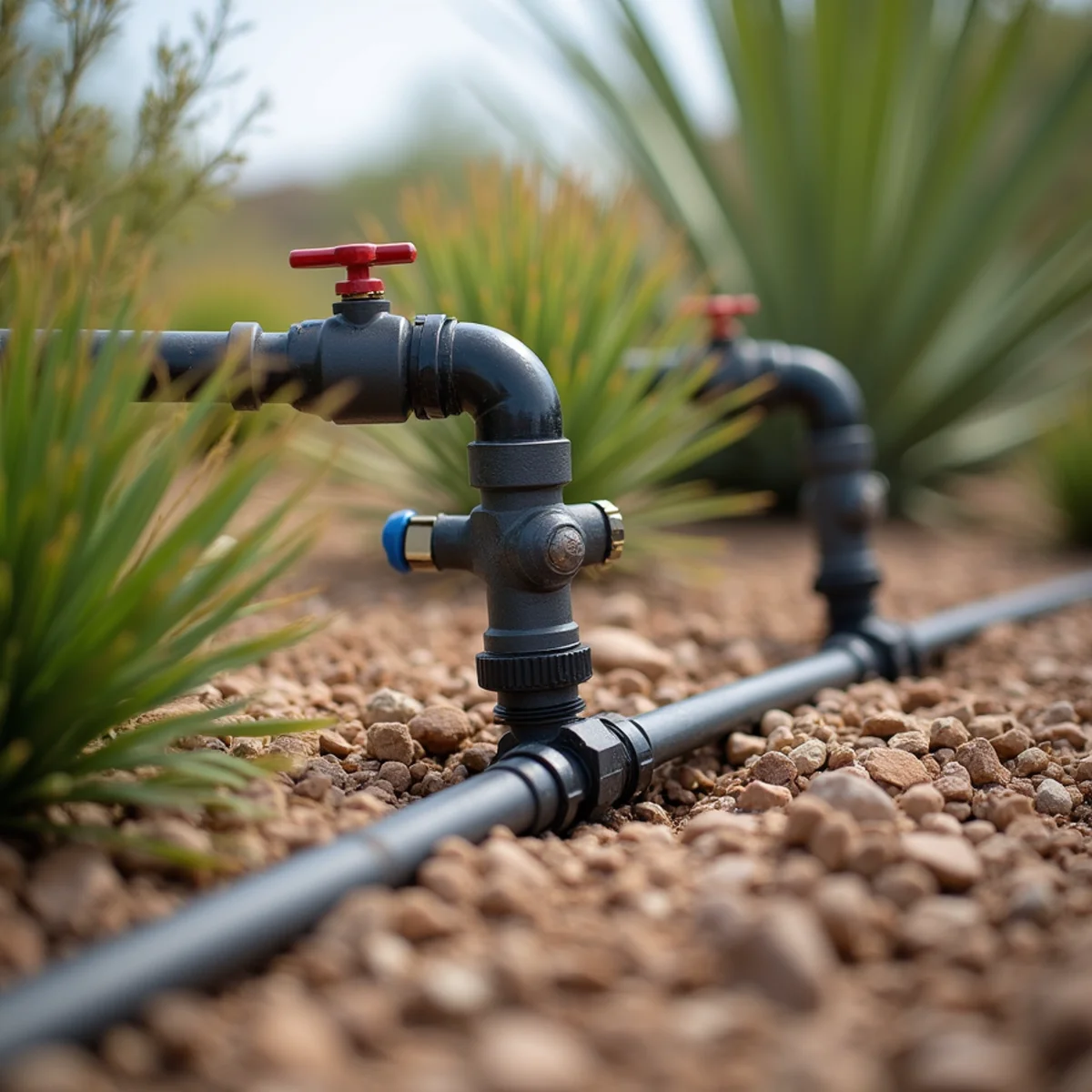
A zone-by-zone look at what drip irrigation installation costs in the East Valley, why caliche drives up trenching labor, and how smart controllers change the long-term math.
Drip irrigation is not a luxury in the East Valley; it is the delivery system that keeps desert plants alive without wasting the region's scarcest resource. Whether you are landscaping a new yard or replacing a failed system, the cost hinges on how many watering zones you need, how hard the ground is to trench, and how smart you want the controller. Here is how those pieces add up, using current Phoenix-metro planning benchmarks.
Why Drip Irrigation Is Mandatory for Arizona Desert Plants
Spray heads throw water into the air where much of it evaporates in triple-digit heat, and they wet leaves and rock instead of roots. Drip irrigation places water directly at the root zone, slowly enough that it soaks in rather than running off baked, water-repellent soil. This is also what makes cycle-and-soak scheduling possible, where the controller runs short cycles with soak breaks so water penetrates deep instead of pooling. The EPA WaterSense program and University of Arizona Cooperative Extension both point to targeted, low-volume delivery as the efficient standard for desert plantings.
If your yard still relies on old spray zones, converting to drip is usually the single highest-impact irrigation upgrade you can make. Our drip irrigation installation and repair service handles both new builds and conversions.
Drip also gives you precise control over how each plant is watered. A shade tree wants a long, deep soak that pushes moisture down to a wide root plate, while a bed of low accents wants a shorter, shallower drink. Spray zones cannot make that distinction; they blanket everything the same way. By grouping plants with similar needs onto their own valves, a drip system lets you water each group correctly, which is better for plant health and for the bill. This is also the foundation of cycle-and-soak scheduling, where the controller breaks each watering into short bursts with soak intervals so water sinks in rather than sheeting off the hard desert surface.
Cost Per Zone: Pressure Regulators, Valves and PVC Mainlines
Irrigation is priced largely by the zone, because each zone needs its own valve, its own run of tubing, and its own place in the controller schedule. Grouping plants with similar water needs into separate zones is what lets you water a shade tree differently from a bed of low accents. The benchmarks below help you frame a budget before a site visit.
| Component | Role in the system | Typical benchmark |
|---|---|---|
| Per irrigation zone | Valve, tubing, emitters, and controller wiring | $300 – $700 per zone |
| Pressure regulator and filter | Drops city pressure to drip range and screens grit | $40 – $120 installed |
| Backflow / anti-siphon valve | Protects the potable supply | $60 – $200 |
| PVC mainline run | Buried supply line feeding the valves | $4 – $9 per linear foot |
| Smart Wi-Fi controller | Weather-based scheduling for multiple zones | $150 – $450 plus install |
What Drives the Range
Two yards of the same size can quote very differently, and the swing is almost always labor and complexity rather than parts. A flat, open lot with soft soil and an existing controller is at the low end. A yard with long mainline runs, many separate planting areas each needing its own zone, hard caliche to trench through, and an old system to demolish first lands at the high end. The number of zones is the biggest single driver, because each one multiplies the valve, wiring, and tubing work. When you request a quote, ask for the zone count and the trenching assumptions spelled out so you can compare bids on equal terms.
Emitter Types and Why They Matter to Cost
The emitters themselves are inexpensive, but choosing the right type protects the far larger investment in plants and labor. Pressure-compensating emitters deliver a steady flow even across slopes and long runs, which keeps a plant at the end of a line getting as much water as the first plant on it. Higher-flow bubblers suit trees and large shrubs, while low-flow drip emitters suit accents and groundcovers. A system spec that standardizes on quality, clog-resistant emitters costs a little more up front and saves repeated service calls later, especially given the region's hard water.
Caliche Trenching Costs: Why East Valley Ground Requires Extra Labor
The line item that surprises most homeowners is trenching. Much of the East Valley sits over caliche, a rock-hard calcium-carbonate hardpan. A standard trencher that flies through soft soil elsewhere stalls or bounces off caliche, so crews switch to pneumatic breakers, rock saws, or hand work, and labor hours climb. Yards in Mesa and the surrounding communities frequently hit caliche within the first foot of digging.
Smart Wi-Fi Controllers: Upfront Cost vs Long-Term Water Savings
A basic timer runs whether it rained or not. A smart, weather-based controller pulls local evapotranspiration and forecast data to skip or shorten cycles automatically, and many are WaterSense labeled. The upfront cost is higher, but on a multi-zone desert yard the reduction in overwatering can pay it back, while also protecting plants from the root rot that constant overwatering causes in slow-draining desert soil.
Overwatering is a genuinely expensive habit in the desert, and it is more common than underwatering. A controller that keeps running a fixed schedule through a cool, cloudy week or during a monsoon storm wastes water and keeps the root zone saturated, which invites the fungal problems desert plants are otherwise resistant to. The seasonal-adjust feature alone, which automatically ramps watering up as June heat builds and back down in the mild months, prevents a lot of that waste without you touching the box.
- Seasonal adjust: automatically dials watering up in June and down in January without you touching it.
- Rain and freeze skip: pauses cycles during storms and cold snaps.
- Flow alerts on higher-end models: warns you of a possible leak before the bill does.
- Remote control: adjust zones from your phone, useful for second homes and rentals.
Signs Your Existing Drip System Needs Complete Replacement
Not every system is worth patching. Poly tubing degrades in UV, emitters clog with hard-water scale, and buried fittings crack under summer pressure spikes. Watch for these signals that a full replacement is the smarter spend:
- 1Emitters that drip unevenly or not at all across a zone, pointing to widespread clogging.
- 2Tubing that has gone brittle and splits when you flex it.
- 3Plants declining on one side of the yard while others thrive, a classic zone-failure pattern.
- 4Unexplained jumps in the water bill, which can mean an underground mainline leak, our irrigation mainline leak repair service handles those emergencies.
- 5A controller so old it cannot run cycle-and-soak or seasonal programs.
Ongoing Maintenance Costs to Budget For
Installation is not the last dollar a drip system asks for, and planning for modest upkeep is smarter than being surprised by it. Desert drip systems are low-maintenance, not maintenance-free, and a small annual budget keeps them delivering the water savings that justified the install.
- Seasonal flushing of the lines to clear sediment and mineral fines before they clog emitters.
- Cleaning the inline filter, which does nothing if it is left caked with grit.
- Replacing individual scaled-over emitters, which are cheap but do fail in hard water.
- Moving and adding emitters outward as trees and shrubs mature and their roots spread.
- A pre-summer check of the whole system before peak demand, when a hidden failure does the most damage.
Bundling this into an annual or seasonal service visit is far cheaper than replacing plants that died from a clog nobody caught. For homeowners who would rather not track it themselves, a maintenance plan folds these tasks into a predictable schedule.
Schedule an Irrigation Diagnostic Audit
The cheapest irrigation dollar is the one you spend on a system sized and zoned correctly the first time. We audit existing systems, map zones to plant needs, and give you a written estimate that separates must-fix repairs from optional upgrades. Homeowners across Mesa, Tempe, and Scottsdale rely on Ecosphere Landscaping, locally owned since 2017 and fully licensed and insured, for drip work built to last in desert conditions.
A quick word on doing it yourself: laying poly drip tubing on the surface for a small bed is well within reach for a handy homeowner, and there is no shame in a simple DIY zone. Where the value of a professional shows up is in the parts that are expensive or hard to redo, correct zoning, buried mainlines trenched through caliche at proper depth, backflow protection, pressure regulation, and a controller programmed for cycle-and-soak. Getting those right the first time is what separates a system that quietly saves water for a decade from one that leaks, clogs, and underwaters the plants it was meant to protect.
Ready for a system that waters roots, not the driveway? Call Ecosphere Landscaping at (323) 606-0255 to book a drip irrigation diagnostic and installation estimate.
Talk to a local desert landscaping expert
Serving Mesa & the East Valley since 2017. Get honest, itemized pricing and water-smart advice for your specific yard.
Frequently asked questions
As a planning benchmark, expect roughly $300 to $700 per zone including the valve, tubing, emitters, and wiring. The total depends on the number of zones, mainline length, and how much caliche trenching the site requires.
Much of the East Valley sits over caliche, a cemented hardpan that standard trenchers cannot cut. Breaking through it requires pneumatic or heavy equipment and extra labor hours, which raises the trenching portion of the bill.
On a multi-zone desert yard, a weather-based WaterSense controller usually reduces overwatering enough to justify the cost, and it protects plants from root rot caused by watering during rain or cold.
Yes. Converting spray zones to drip is one of the highest-impact upgrades in a desert yard, cutting evaporation loss and putting water at the root zone. We handle conversions and full replacements.
Related services & areas
Service areas