A: Cost & Pricing
Cost of Converting Grass to Xeriscape in Mesa: Rebate Guide
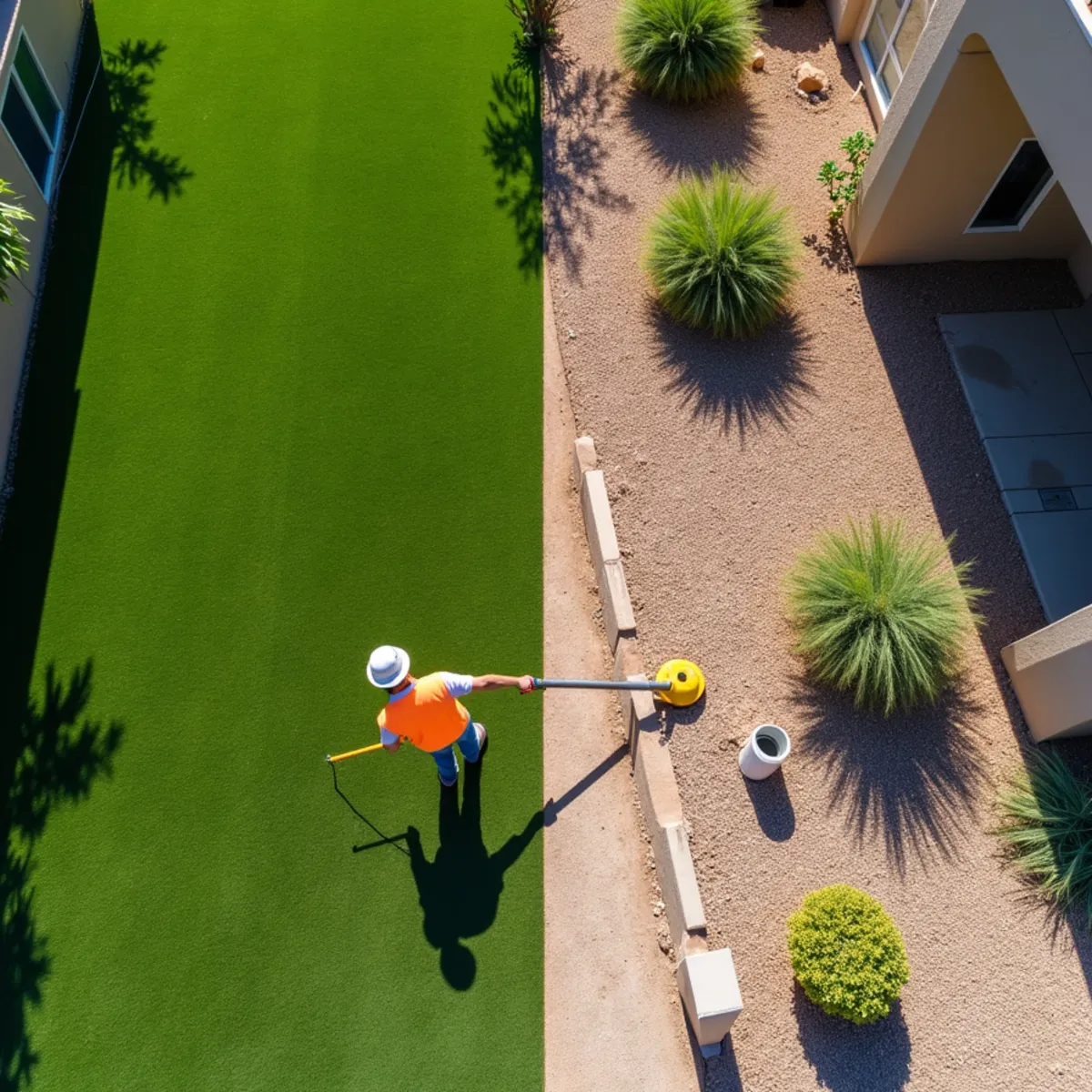
A clear, benchmark-based breakdown of what it costs to replace a thirsty Bermuda lawn with desert landscaping in Mesa, plus how the City rebate can offset a big share of the bill.
If your summer water bill spikes every July while your Bermuda lawn still browns out, you are paying a premium to keep a plant alive that never belonged in the Sonoran Desert. Converting grass to xeriscape is one of the few home projects in Mesa that lowers a recurring bill, qualifies for a municipal rebate, and raises curb appeal at the same time. This guide lays out the real cost drivers using current Phoenix-metro planning benchmarks so you can budget before you call anyone for a quote.
Why Mesa Homeowners Are Eliminating Thirsty Bermuda Lawns
Mesa sits in a region that receives under 10 inches of rain a year, with July average highs above 104 degrees. Bermuda and other turf grasses are warm-season lawns that demand frequent irrigation through that heat, and outdoor watering is the largest slice of most East Valley household water use. The City of Mesa Water Conservation program and the Arizona Department of Water Resources both promote low-water landscaping precisely because turf is the single biggest lever a homeowner controls.
Beyond the water bill, a lawn in this climate is a maintenance treadmill: mowing, fertilizing, overseeding, and constant repair of heat-stressed patches. Bermuda goes dormant and brown in winter, so many homeowners overseed with winter rye every fall just to keep a green look, which means a second grass species, a second watering regime, and a second round of mowing through the cool months. A well-built desert landscape trades that year-round labor for a yard that looks intentional in every season. If you are weighing the two approaches head to head, our overview of desert landscape design and xeriscaping walks through how a converted yard is planned for shade, seasonal color, and low upkeep.
It is also worth knowing your rights before you start. Under Arizona law, specifically ARS section 33-1808, a homeowners association cannot prohibit desert or xeriscape landscaping in front yards, though an HOA may still enforce reasonable design standards. If your community has design review, submit your plan for approval alongside your rebate application so both are aligned before any grass comes out.
City of Mesa Grass-to-Xeriscape Rebate Program Details
The City of Mesa offers a grass-to-xeriscape rebate that pays homeowners a set amount per square foot of live grass removed and replaced with qualifying low-water landscaping, up to a program cap that has historically reached $2,100. Because eligibility rules, per-square-foot rates, plant requirements, and the cap can change from year to year, treat every figure here as a planning estimate and verify current terms directly with the City of Mesa before you start.
- Pre-approval is usually required before any grass is removed, so photos and measurements come first.
- A minimum square footage of removed turf typically applies, and the area must convert to approved desert landscaping, not bare dirt or gravel alone.
- Live plant coverage and an efficient drip irrigation system are commonly required to pass the final inspection.
- Rebates are paid after completion and inspection, so you fund the project up front and recover part of it later.
Cost Breakdown: Sod Removal, Caliche Prep, Rock and Plants
A full-service conversion in the East Valley generally lands in the $5 to $15 per square foot range as a planning benchmark, with the spread driven by soil conditions, plant density, and design complexity. The table below shows how a typical project divides up. Your actual numbers depend on access, haul distances, and how heavily you plant.
| Line item | What it covers | Typical benchmark |
|---|---|---|
| Sod and root removal | Cutting, stripping, and hauling away Bermuda and its runners | $1.00 – $2.50 / sq ft |
| Soil and caliche prep | Grading, weed barrier, and breaking any caliche that blocks drainage | $1.00 – $3.00 / sq ft |
| Decomposed granite | 2-inch rock layer over geotextile fabric | $1.50 – $3.50 / sq ft |
| Desert plants | Native and low-water shrubs, accents, and shade trees | $1.50 – $5.00 / sq ft |
| Drip irrigation | Zoned drip lines, emitters, and a controller | $1.00 – $2.50 / sq ft |
Why Bermuda Removal Costs More Than It Looks
Bermuda spreads by underground rhizomes and above-ground stolons, so simply scraping the surface leaves living runners that resprout through new rock. Proper removal means stripping the sod, removing the root mass, and often applying a pre-emergent strategy before the rock goes down. Skipping this step is the number one reason a cheap conversion turns into a weed problem within a season.
The Caliche Factor
Much of Mesa sits over caliche, a cemented calcium-carbonate hardpan that can be inches to feet thick. Where planting holes or drainage hit caliche, crews need pneumatic breakers or augers to get through it, which adds labor. Our caliche soil breaking and trenching service exists specifically because standard shovels and trenchers bounce off this layer, and unaddressed caliche drowns new plant roots in a bathtub of trapped water.
Plants and Trees: Where to Invest
Plants are the line item that most changes the character of the finished yard, and it is worth spending here rather than settling for a bare gravel lot. A thoughtful palette layers a few desert shade trees, such as palo verde or mesquite, with mid-size shrubs like Texas sage and desert spoon, and low accents such as agave, red yucca, and seasonal wildflowers. Trees cost more up front but deliver the biggest long-term payoff by shading the house and cooling the yard, which in turn lowers cooling bills. Native and desert-adapted species also handle the alkaline soil and heat with far less fuss than imported ornamentals.
Denser planting costs more per square foot but reads as an intentional landscape rather than an empty rock field, and it is also what most rebate programs require to qualify. A reasonable middle path is to concentrate planting where it is seen and used, near entries, windows, and seating, while keeping open decomposed granite in transitional areas.
Decomposed Granite Pricing: 1/4 Minus vs 1/2 Screened
Decomposed granite, or DG, is the workhorse ground cover of desert yards, and the size you choose changes both look and function. Delivered price per ton varies with color and haul distance from the quarry, so budget by coverage rather than by a single sticker price.
- 1/4-inch minus DG contains fine material that compacts into a firm, walkable surface, ideal for paths and open areas.
- 1/2-inch screened rock has the fines removed, so it stays loose and drains fast, but it shifts more underfoot.
- Earth-tone colors like Madison Gold and Apache Brown are popular in Mesa because they hide dust and blend with native plants.
- Plan on roughly a 2-inch layer over a woven geotextile barrier for effective weed suppression; see our decomposed granite and rock landscaping page for material options.
Water Bill ROI: How Much You Save Annually
Turf is the thirstiest thing in most yards, so replacing it can meaningfully reduce outdoor water use, but the exact savings depend on your lawn size, your prior watering habits, and Mesa's tiered water rates. Rather than promise a dollar figure, think of the return in three parts: a lower monthly water bill, near-zero mowing and overseeding costs, and the one-time rebate that offsets part of the install. Combined, those three usually shorten the payback period considerably compared to a landscape upgrade that saves nothing on utilities.
There is a resale angle too. A mature, water-wise desert landscape is increasingly what East Valley buyers expect, and a yard that clearly costs little to maintain is a selling point rather than a chore a buyer has to price in. Unlike a lawn that must be kept alive continuously to look presentable, a xeriscape holds its appearance even if watering is briefly interrupted, which matters for rentals, second homes, and anyone who travels in summer.
Common Mistakes That Blow the Budget
The conversions that go over budget or fail early tend to repeat the same avoidable errors. Knowing them ahead of time keeps your project on plan.
- 1Skipping full Bermuda removal to save money, then paying to fight resprouting weeds through the new rock for years.
- 2Laying rock straight on soil with no geotextile barrier, so weeds and mud migrate up within a season.
- 3Ignoring caliche under planting holes, which drowns the very trees that were the most expensive part of the job.
- 4Removing grass before securing rebate pre-approval and losing the reimbursement entirely.
- 5Under-planting into a gravel lot that neither qualifies for the rebate nor cools the yard.
- 6Reusing an old spray system instead of installing zoned drip, which wastes the water savings the conversion was meant to deliver.
How to Claim Your Rebate with Help from Ecosphere Landscaping
The rebate process rewards good documentation. We photograph and measure the existing lawn, design a qualifying plant layout, install the rock and drip system to program standards, and hand you the paperwork the City needs for its inspection. Because we work across the East Valley, homeowners in Mesa, Gilbert, and Chandler can compare their own municipal programs, since neighboring cities run separate rebates with different rules.
Ecosphere Landscaping is a locally owned, licensed and insured company that has served the Mesa area since 2017. If you are ready to trade a thirsty lawn for a lower bill and a yard built for the desert, call us at (323) 606-0255 for a site walkthrough and a written estimate you can take straight to the rebate application.
Talk to a local desert landscaping expert
Serving Mesa & the East Valley since 2017. Get honest, itemized pricing and water-smart advice for your specific yard.
Frequently asked questions
As a Phoenix-metro planning benchmark, a full-service conversion runs about $5 to $15 per square foot depending on soil conditions, plant density, and design. A site visit is the only way to get a firm number, and the City of Mesa rebate can offset part of it.
Mesa has historically offered a per-square-foot rebate up to a cap that has reached $2,100. Rates, minimums, and the cap change over time, so verify current eligibility with the City of Mesa before removing any grass.
Only if the Bermuda roots are not fully removed or the weed barrier is skipped. Proper sod and rhizome removal, a woven geotextile fabric, and a pre-emergent plan keep a converted yard clean.
Most rebate programs require live desert plants supported by an efficient irrigation system, which in practice means zoned drip. Bare gravel with no plants typically does not qualify.
Related services & areas
Service areas