C: Problem & Diagnosis
Clogged Drip Emitters: How Hard Mineral Water Kills Desert Shrubs
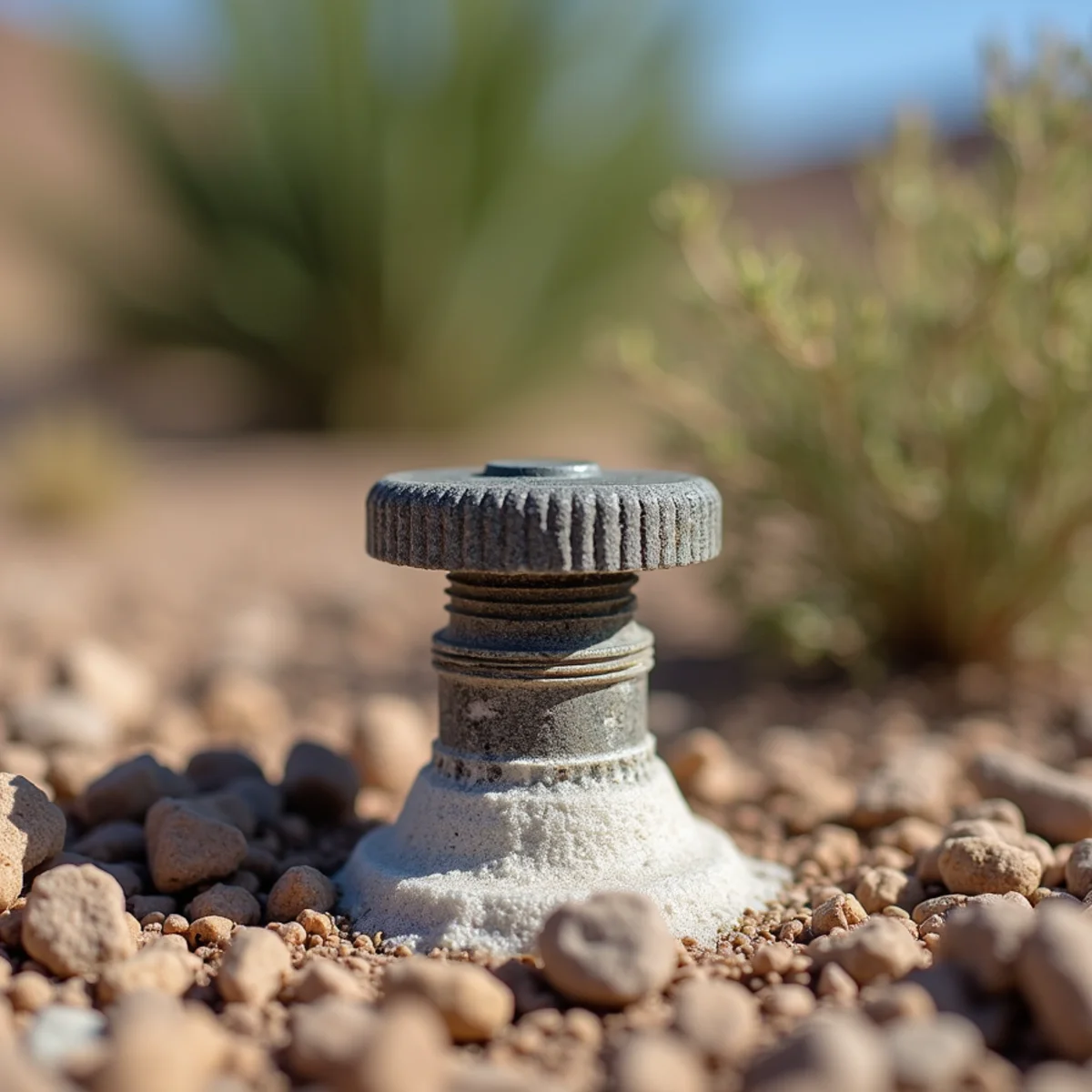
Phoenix hard water calcifies the tiny orifices in drip emitters, silently cutting off water to drought-hardy shrubs. How to diagnose clogs and prevent them for good.
One of the most common reasons a healthy desert shrub suddenly declines has nothing to do with the plant and everything to do with the hardware feeding it. Drip emitters have tiny orifices, and Phoenix's hard, mineral-rich water slowly cements them shut. The plant stops getting water while everything looks normal from above ground, and by the time it is obvious, the shrub is in trouble. Here is how to catch and prevent it.
Why Phoenix Tap Water Calcifies Small Drip Emitter Orifices
Valley tap water is hard, meaning it carries high levels of dissolved calcium and other minerals. Every time water passes through a drip emitter and the last bit evaporates at the outlet, it leaves a trace of mineral scale behind. Because emitter orifices are deliberately tiny to deliver a slow, measured flow, it does not take much scale to choke them. Over months, that buildup narrows and then blocks the opening entirely, the same way a kettle furs up, except here the result is a plant that quietly stops being watered.
The desert heat speeds the whole process up. High evaporation means more water is being drawn through the system and more scale is deposited per gallon, and the last drop clinging to an emitter outlet in 110-degree air dries almost instantly, leaving its minerals behind. Grit and fine sediment in the line add to the problem, wedging into partly scaled orifices and finishing the blockage. That combination of hardness, heat, and sediment is why emitter clogging is one of the most common irrigation service issues across the Valley.
How Underground Clogs Silently Kill Drought-Hardy Plants
The danger is that the failure is invisible. A spray head that stops working sends up an obvious dry patch, but a clogged emitter tucked under a shrub gives no visual warning. Drought-hardy desert plants make it worse by hiding stress well until they are severely dehydrated, so the decline sneaks up. By the time a tough native shrub looks visibly sick, it has often been starved of water for weeks, and recovery is far from guaranteed. That slow, silent timeline is exactly why routine checks matter more than reacting to symptoms. Watch for these tell-tale signs during your walk-arounds:
- One shrub wilting or yellowing while identical plants on the same zone look fine.
- White, crusty mineral scale visible on or around the emitter outlet.
- An emitter that does not drip, or drips far slower than its neighbors, when the zone runs.
- Soil that stays dry right at the base of a plant after a full irrigation cycle.
Why Watering More Does Not Fix It
When a shrub starts to struggle, the natural response is to add water, either by extending the run time or increasing the frequency. With a clogged emitter, that does nothing for the affected plant, because no additional water reaches it no matter how long the zone runs. Worse, it overwaters every healthy plant on the same zone, wasting water and inviting root rot in the plants that were fine. The struggling shrub keeps declining while the water bill climbs, which is exactly the frustrating pattern homeowners describe before the real cause, a blocked emitter, is found. The fix is always at the emitter, never at the controller.
Pressure-Compensating vs Micro-Bubbler Emitter Upgrades
Not all emitters clog equally, and upgrading the hardware reduces the problem. Pressure-compensating emitters deliver a consistent flow across varied line pressure and elevations, and quality models are designed to resist clogging and are easy to replace. For larger shrubs and trees, micro-bubblers and higher-flow emitters have wider openings that scale up more slowly than pinhole drip emitters, while still delivering water to the root zone. Choosing the right emitter for each plant size is part of a well-built system; our drip irrigation installation and repair team matches emitters to plants and standardizes the components so future maintenance is simple.
Some pressure-compensating emitters also feature a self-flushing design that opens briefly at the start and end of each cycle to clear debris, which is a meaningful advantage in hard water. Spending a little more on quality, clog-resistant emitters at installation almost always costs less over a few years than repeatedly replacing cheap ones and the plants they starve.
Flushing Drip Irrigation Lines and Acid Descaling Solutions
Regular flushing is the core maintenance habit that keeps a drip system alive in hard water. Sediment and mineral fines settle in the lines, so opening the ends of the laterals and letting the system run clears that debris before it reaches the emitters. For emitters already scaled up, individual units can be cleaned or, more often, simply replaced, since they are inexpensive. Professional maintenance may also use an approved descaling or line-cleaning treatment to dissolve mineral buildup throughout the system. Building periodic flushing into a maintenance schedule is far cheaper than replacing dead plants.
Flushing works because most drip tubing runs to open ends that are simply capped, so uncapping them lets water rush through at full flow and carry out the fine grit and mineral sediment that would otherwise settle and feed clogs. Doing it before the high-demand summer months means the system enters its hardest working season clean. For stubborn, system-wide scale, a professional descaling treatment circulates a mild acidic solution to dissolve the calcium buildup, but that is a targeted intervention rather than a routine step, and it should be handled by someone who knows the system and the correct dilution.
Installing Inline Screen Filters to Protect Emitter Systems
Prevention beats cleaning, and the frontline defense is a good filter. An inline screen or disc filter installed at the head of the system catches grit and particulates before they reach the emitters, and a pressure regulator keeps the line at the low pressure drip components are designed for, reducing stress and blowouts. Filters need periodic cleaning themselves to keep working, which is exactly the kind of routine task a maintenance program covers. For commercial properties and HOAs with large emitter counts, this preventive approach is essential; our commercial and HOA desert grounds maintenance service keeps large systems flushed, filtered, and running.
A Simple Seasonal Maintenance Routine
You do not need to be an irrigation specialist to keep clogs from killing plants. A short routine, done a couple of times a year, catches nearly every problem before it costs you a shrub:
- 1Before summer, run each zone and walk the yard, confirming every emitter is dripping.
- 2Open the ends of the lateral lines and let the system flush sediment, then recap them.
- 3Remove and rinse the inline filter screen, replacing it if it is torn or heavily fouled.
- 4Replace any scaled-over emitters rather than fighting to clean them, since they are inexpensive.
- 5Repeat a quick check as the hot season winds down so nothing carries a clog into next year.
Schedule Routine Irrigation Maintenance with Ecosphere
Drip systems are low-maintenance, not no-maintenance, and in hard water a little routine care prevents the slow, silent plant losses that clogged emitters cause. Ecosphere Landscaping is locally owned, licensed, and insured, and we service drip systems across Mesa, Sun Lakes, and Higley.
Losing shrubs for no obvious reason? It may be your emitters. Call Ecosphere Landscaping at (323) 606-0255 to schedule routine irrigation maintenance and emitter service.
Talk to a local desert landscaping expert
Serving Mesa & the East Valley since 2017. Get honest, itemized pricing and water-smart advice for your specific yard.
Frequently asked questions
Phoenix tap water is hard and mineral-rich, so it leaves calcium scale behind as water evaporates at the tiny emitter orifices. Over months that scale narrows and blocks the opening, cutting off water to the plant.
Run the zone and check each emitter is dripping. Warning signs include one shrub wilting while its neighbors thrive, white scale on the outlet, soil that stays dry at a plant's base, and emitters that drip slowly or not at all.
Minor buildup can sometimes be cleaned, but emitters are inexpensive, so replacement is usually the simplest fix. Pairing that with line flushing and a screen filter prevents the problem from returning.
Install an inline screen or disc filter and a pressure regulator, flush the lines at the start and end of the hot season, upgrade to clog-resistant pressure-compensating emitters, and keep the filter clean through routine maintenance.
Related services & areas
Service areas